Before the Foundation Is Poured: How Arizona's Architectural Firms Use Photography to Win Approvals and Shape the Built Landscape
There is a particular moment in every architectural project when the fate of months—sometimes years—of design work rests on how a room full of people feels about an image. Not the structural calculations. Not the zoning compliance documents. The image. In Arizona, where development pressure is intense and planning board scrutiny is rigorous, architectural firms have come to understand that presentation photography is not a finishing touch. It is a foundational strategic instrument.
The relationship between specialized photography and architectural decision-making runs deeper than most outside the profession realize. When a firm presents a design to a private developer in Scottsdale or a municipal planning committee in Phoenix, the visual materials they bring to that meeting carry enormous persuasive weight. A rendering, no matter how technically precise, must be translated into something that communicates emotion, context, and inevitability. That translation is the work of a skilled architectural photographer—and it begins long before construction does.
The Psychology of the Pre-Construction Image
Human beings are not wired to evaluate architectural drawings with clinical detachment. We respond to space, light, and scale in visceral, often unconscious ways. Architectural firms operating in Arizona's high-stakes development environment have learned to exploit this reality deliberately and thoughtfully.
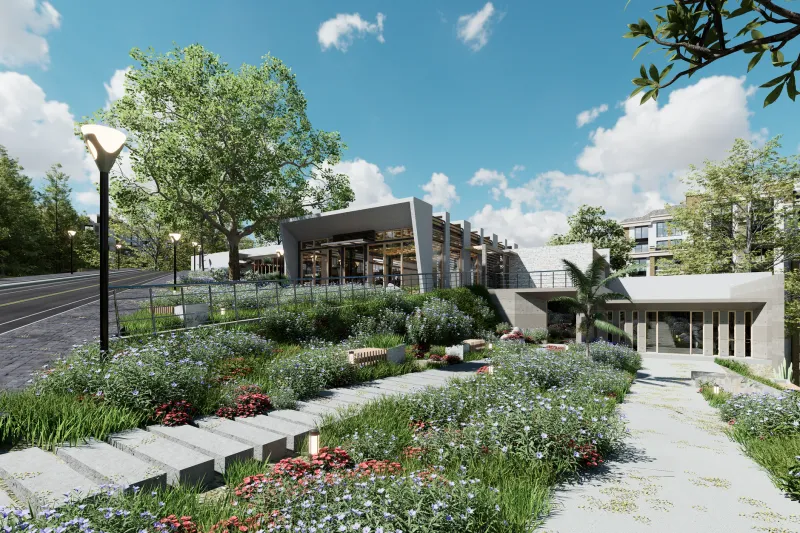
Presentation photography—encompassing everything from photographed physical scale models to carefully lit renderings and site-context composites—is engineered to guide the viewer's emotional response. The goal is not deception. Rather, it is the artful compression of a future state into a present-tense image that feels authentic and achievable.
Consider the role of light. Arizona's signature quality of illumination—that dry, high-contrast desert light that architectural photographers prize—can be introduced into pre-construction imagery to anchor a design within its geographic reality. When a planning board member in Tempe or Chandler sees a proposed building bathed in the warm, directional light characteristic of a late-afternoon Arizona sky, something shifts. The building no longer feels like a proposal. It feels like a memory waiting to happen.
Angle, Composition, and the Art of Controlled Perspective
The angle from which a structure is presented is never arbitrary. Experienced photographers working with Arizona architectural firms understand that perspective is argument. A low camera angle lends a building authority and grandeur. A slightly elevated vantage point can emphasize a design's relationship to surrounding landscape—critical in a state where mountain views and desert terrain are frequently central to a project's value proposition.
Composition, too, serves strategic purposes. Leading lines drawn from the surrounding streetscape or natural terrain toward the proposed structure create a visual logic that suggests the building belongs precisely where it is placed. Negative space around a design can evoke openness and breathability—qualities that resonate powerfully with Arizona clients who associate crowded urban density with other, less desirable places.
Firms working on mixed-use developments along the Valley's light rail corridors, or on resort properties in the Sedona and Scottsdale markets, often commission photography that integrates the proposed structure into actual site photographs. This hybrid approach—combining photographic documentation of the existing environment with rendered architectural elements—produces images that are simultaneously honest about the site's current condition and aspirational about its future state.
The Planning Board Dimension
Municipal planning processes in Arizona can be lengthy and contentious. Community stakeholders, neighborhood associations, and elected officials all bring their own visual assumptions to the table. Architectural photography designed for planning board presentations must therefore serve a dual audience: sophisticated design professionals on one side, and engaged community members with varying degrees of visual literacy on the other.
The most effective presentation images achieve clarity at multiple levels of engagement. A resident attending a public hearing in Mesa or Tucson should be able to look at a presentation photograph and immediately understand how the proposed structure will relate to the buildings and streets they pass through every day. At the same time, the image must satisfy the more exacting standards of professional planners and commissioners who are trained to scrutinize scale, setback, massing, and material authenticity.
This dual demand places significant pressure on the photographer. Lighting choices that read as dramatic and evocative in a boardroom presentation must not appear manipulative or misleading when projected in a public forum. The ethical dimension of architectural presentation photography is real, and Arizona's most reputable firms take it seriously.
Tension Between Aspiration and Accuracy
No examination of pre-construction photography would be complete without acknowledging the inherent tension between aspirational visualization and realistic representation. A photograph that makes a proposed structure look magnificent is a powerful sales tool. It is also, potentially, a promise—one that the completed building must ultimately keep.
Experienced architectural photographers in Arizona navigate this tension with care. The goal is to present a design at its most compelling without misrepresenting material qualities, scale relationships, or contextual fit. Shadows should fall in directions consistent with the site's actual solar orientation. Surrounding structures should appear at accurate relative scales. Landscaping elements, if included, should reflect what is genuinely achievable within the project's horticultural and budgetary parameters.
When these standards are honored, presentation photography serves everyone's interests. Clients make decisions based on an accurate understanding of what they are commissioning. Planning boards evaluate proposals without being misled about community impact. And architects build reputations for integrity that sustain their practices across market cycles.
Why Specialized Photography Matters at the Design Stage
Arizona's architectural firms that invest in specialized presentation photography at the earliest stages of a project report a consistent pattern: decisions get made faster, with greater confidence, and with fewer costly revisions downstream. When a client can see—truly see—how a proposed design will inhabit its desert setting, the conversation shifts from uncertainty to refinement.
This is the ultimate value proposition of precision presentation photography. It does not merely document a design. It translates an architect's vision into a shared reality that clients, planners, and communities can inhabit emotionally before a single cubic yard of concrete is placed.
In a state where the built environment is expanding at a pace few other markets can match, that capacity for visual persuasion is not a luxury. It is a competitive imperative—and for Arizona's leading architectural practices, it has become as essential to the design process as the drawings themselves.