Roots, Blooms, and Business: How Professional Botanical Photography Is Transforming Arizona's Landscape Design Industry
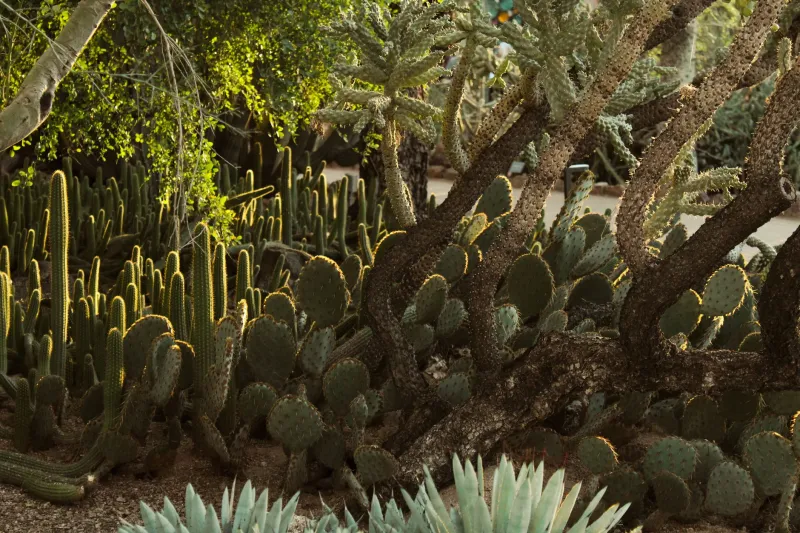
Arizona occupies a singular position in the American landscape design world. Its native flora — towering saguaros, cascading palo verde branches, the jewel-toned blossoms of desert marigold and globe mallow — presents a visual vocabulary unlike anything found elsewhere on the continent. Yet for years, many of the businesses built around this extraordinary botanical heritage relied on mediocre photography to present their work: smartphone snapshots taken at noon, catalog images licensed from generic stock libraries, or portfolio photos that failed to distinguish one design firm from another.
That era is rapidly coming to a close. Across the state, landscape architects, native plant nurseries, botanical gardens, and luxury outdoor living companies are investing in specialized botanical photography — and the return on that investment is measurable, significant, and growing.
The Visual Language of Desert Flora
Photographing plants in Arizona is not simply a matter of pointing a camera at something green and pressing a shutter. Desert flora presents a series of technical challenges that demand both botanical knowledge and advanced photographic skill.
The most immediate obstacle is light. Arizona's sun is famously intense, and what flatters a mountain meadow in Vermont can completely destroy the visual integrity of a desert garden. Harsh midday light bleaches color from flower petals, collapses the dimensional complexity of cactus spines, and creates blown-out highlights on the waxy surfaces of agave leaves. A professional botanical photographer working in Arizona must possess an intimate understanding of how desert light behaves across different times of day, different seasons, and different microclimates.
Early morning and the hour before sunset — what photographers refer to as golden hour — transform Arizona's botanical subjects. The low-angle, warm-toned light rakes across textured surfaces, revealing the sculptural detail of a barrel cactus in a way that overhead illumination never could. Soft, diffused light after an afternoon monsoon storm renders the translucent petals of a prickly pear bloom with extraordinary fidelity. These are the moments that distinguish professional botanical photography from casual documentation, and they require patience, preparation, and a willingness to work unconventional hours.
Why Landscape Design Businesses Cannot Afford to Overlook This
The luxury outdoor living market in Arizona has expanded substantially over the past decade. Homeowners in communities such as Scottsdale, Paradise Valley, and Sedona are committing significant budgets to outdoor spaces that function as extensions of their interiors — curated, designed, and finished to the same standard as the homes they surround. In this market, the first impression a landscape design firm makes is almost always a visual one.
A prospective client browsing design portfolios on a firm's website or Instagram profile is making rapid, often subconscious judgments based on image quality. Photography that accurately conveys the texture of decomposed granite, the color gradation within a mixed native planting bed, or the evening ambiance of a desert garden illuminated by integrated lighting communicates competence and sophistication before a single word of copy is read.
Native plant nurseries face a parallel challenge. Customers purchasing plants for sustainable, water-conscious landscaping — a market segment growing steadily as Arizona grapples with long-term water scarcity — are often unfamiliar with the mature appearance and design potential of native species. A well-executed botanical photograph of a mature desert willow in full bloom, or a close-up study of the architectural foliage of a red yucca, does more to drive purchasing decisions than any written plant description.
Botanical Gardens and the Institutional Imperative
Arizona is home to several world-class botanical institutions, including the Desert Botanical Garden in Phoenix — one of the most visited botanical gardens in the United States. For organizations of this caliber, photography serves multiple simultaneous functions: membership marketing, grant applications, educational publications, exhibit promotion, and earned media coverage.
The imagery produced for these purposes must meet a high and varied standard. A photograph intended for a fundraising campaign must carry emotional resonance. An image destined for a scientific publication or interpretive signage demands botanical accuracy. Photography commissioned for a traveling exhibit must possess the technical quality to be reproduced at large scale without degradation.
Specialized botanical photographers who understand these institutional requirements bring more than technical skill to the assignment — they bring an understanding of how images function within different organizational contexts, and how to compose and expose a photograph that serves its intended purpose with precision.
The Sustainable Landscaping Market and the Rise of Visual Storytelling
Sustainable landscaping — xeriscape design, native plant restoration, pollinator garden installation — has moved from a niche environmental concern to a mainstream consumer preference in Arizona. Homeowners associations, municipal governments, and private developers are all prioritizing water-efficient outdoor design, and the businesses serving this market are competing for a growing and increasingly discerning clientele.
In this context, botanical photography has taken on a storytelling dimension that extends beyond simple product or portfolio documentation. The most effective imagery in this space communicates a broader narrative: that a landscape composed of native Arizona plants is not a compromise or a sacrifice of beauty, but rather an aesthetic achievement in its own right — one that connects a property to its regional identity and ecological heritage.
Photographs that capture a monarch butterfly visiting a desert milkweed planting, or a hummingbird hovering before a scarlet sage bloom, communicate the living, dynamic quality of a native plant landscape in a way that a static architectural rendering never could. This kind of imagery is a powerful tool for businesses working to shift public perception and expand their client base.
Technical Considerations: Equipment, Timing, and Collaboration
Professional botanical photography in the Arizona context typically involves a combination of macro and medium-format work, with careful attention to depth of field, focus stacking for extreme close-up subjects, and the use of reflectors or portable diffusion panels to manage harsh ambient light when shooting outside of optimal hours.
Perhaps more importantly, the most successful botanical photography assignments involve genuine collaboration between the photographer and the client. A landscape architect who can walk a photographer through the design intent of a completed project — explaining which plant selections were deliberate, which spatial relationships were carefully considered, which views were composed as part of the design — enables imagery that reflects the intelligence behind the work rather than simply documenting its surface appearance.
This collaborative approach elevates botanical photography from a service transaction to a creative partnership, and the difference is visible in the final images.
Investing in Visual Assets That Work Over Time
Unlike advertising copy or promotional offers, high-quality botanical photography has a long useful life. A portfolio of images from a completed landscape project — photographed professionally at peak bloom, in optimal light, with careful attention to composition — can serve a design firm's marketing needs for years. It can anchor a website redesign, support a magazine feature, illustrate a speaking presentation, or serve as the foundation of a social media content strategy.
For Arizona's landscape design businesses, botanical gardens, and native plant nurseries, the question is no longer whether specialized photography represents a worthwhile investment. The question is how quickly they can build the visual library that their competitors are already developing.
Arizona's botanical world is extraordinary. The photography that represents it should be, too.