The Visual Language of Trust: How Arizona's Medical and Dental Practices Use Specialized Clinical Photography to Educate Patients and Drive Practice Growth
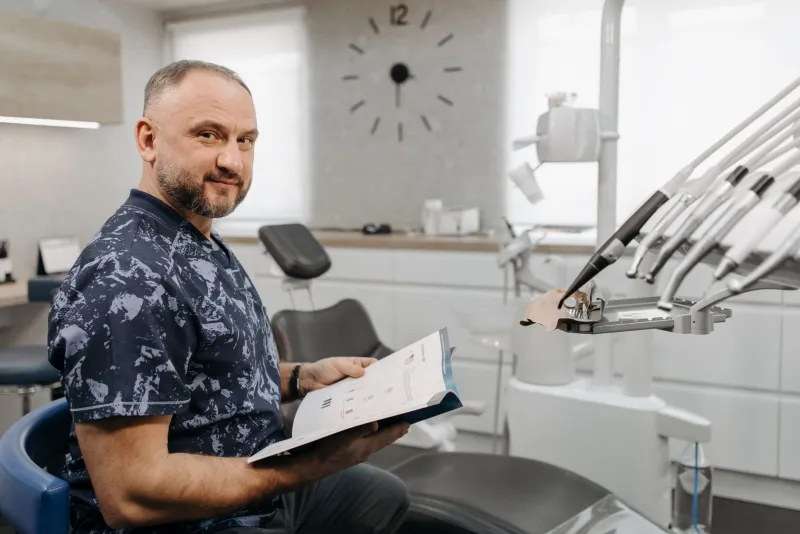
In a state where healthcare options are abundant and patient expectations run high, Arizona's medical and dental communities face a challenge that extends well beyond clinical excellence. Practitioners must communicate competence, inspire confidence, and demonstrate results — often before a prospective patient ever sets foot through the door. The instrument increasingly driving that conversation is not a brochure or a five-star review. It is a photograph.
Specialized clinical photography, executed with precision and governed by strict ethical standards, has become one of the most powerful differentiators available to Arizona's healthcare providers. When done correctly, it transforms abstract promises into visible proof.
Why Clinical Photography Demands a Different Standard
Photographing a patient outcome is fundamentally unlike photographing a product or a landscape. The stakes are considerably higher, and the margin for error — technical, ethical, or compositional — is essentially zero.
A cosmetic dentist in Tempe who shares poorly lit, inconsistently framed before-and-after images does not merely fail to impress prospective patients. That practice actively undermines its own credibility. Uneven lighting creates the illusion of asymmetry. Inconsistent camera angles make genuine improvements appear negligible. A background cluttered with clinical equipment distracts from the result being showcased. In medical photography, every variable that a skilled photographer controls — or fails to control — carries interpretive weight.
Professional clinical photographers working with Arizona practices understand that standardization is the foundation of honest documentation. Fixed focal lengths, controlled lighting temperatures, precise patient positioning protocols, and neutral, distraction-free backgrounds are not aesthetic preferences. They are the technical conditions that allow a viewer to make an accurate, uninfluenced comparison between two moments in time.
Before-and-After Imagery: The Art of the Honest Reveal
No format carries more persuasive power in healthcare marketing than the before-and-after photograph — and no format is more susceptible to misuse. Arizona clinics that invest in professional clinical photography understand that the goal is not to manufacture a dramatic transformation. It is to document a genuine one with enough technical consistency that the result speaks for itself.
For a Scottsdale orthodontic practice, this might mean a standardized series of intraoral and frontal facial photographs taken at identical stages across multiple patients, creating a portfolio that demonstrates predictable, reproducible outcomes. For a Mesa dermatology clinic managing acne treatment programs or skin resurfacing procedures, it requires meticulous attention to lighting continuity — ensuring that the improvement visible in the follow-up image reflects actual skin quality rather than a more flattering light source.
The most effective before-and-after documentation is not the most dramatic. It is the most honest. When prospective patients encounter imagery that appears credible rather than curated, trust follows naturally.
Navigating HIPAA Without Sacrificing Impact
The intersection of clinical photography and patient privacy is where many healthcare practices falter — and where professional guidance becomes indispensable. The Health Insurance Portability and Accountability Act establishes clear requirements around the use of patient identifiable information, and photographs that reveal a patient's face, distinguishing features, or other identifying characteristics fall squarely within that framework.
Arizona healthcare providers working with specialized clinical photographers benefit from practitioners who understand these requirements not as obstacles but as parameters within which compelling, ethical visual storytelling remains entirely achievable.
Proper written patient authorization, carefully drafted consent documentation that specifies the intended use of imagery, and thoughtful compositional choices — such as cropping that excludes identifying facial features where the clinical focus permits — allow practices to build rich visual portfolios without legal exposure. Many Arizona dental and medical clients choose to feature patients whose full testimonial participation includes explicit consent for facial imagery, creating a library of authentic stories that combines visual evidence with human narrative.
The result is marketing that feels transparent rather than transactional — a distinction that resonates deeply with today's discerning healthcare consumers.
The Patient Testimonial Portrait: Humanizing the Clinical Experience
Beyond procedure documentation, Arizona clinics are increasingly commissioning environmental portrait sessions that capture patients in their everyday lives — not in clinical settings, but in the contexts that matter to them. A Phoenix oral surgeon might feature a patient who underwent full-mouth reconstruction photographed confidently at their workplace or laughing with family. A Chandler cosmetic dermatology practice might document a patient's restored self-assurance through candid lifestyle imagery taken months after treatment.
These sessions require a photographer who can establish genuine rapport with subjects who may feel self-conscious about the very transformation being celebrated. The technical demands are considerable — consistent skin tone rendering, flattering yet accurate color grading, and natural lighting that neither glamorizes nor diminishes the result. But the relational demands are equally significant. A clinical portrait that reads as staged or performative defeats its own purpose.
When executed with sensitivity and skill, patient testimonial photography accomplishes something that no clinical before-and-after image can achieve alone: it answers the prospective patient's most fundamental question — not whether the procedure works, but whether it might change their life.
Differentiating Arizona Practices in a Crowded Market
Arizona's healthcare landscape is competitive. The Phoenix metropolitan area alone supports hundreds of dental practices, dermatology clinics, cosmetic surgery centers, and specialty medical offices — many of them offering comparable services at comparable price points. In that environment, visual differentiation becomes a strategic necessity rather than a marketing luxury.
Practices that invest in professional clinical photography communicate something implicit to every prospective patient who encounters their imagery: that the same precision, consistency, and attention to detail evident in their photographs governs their approach to patient care. The photograph becomes a proxy for the practice's values.
Conversely, practices that rely on smartphone snapshots, stock imagery, or inconsistently produced documentation signal — however unintentionally — that precision is not a priority. In a field where patient trust is the primary currency, that signal carries significant cost.
A Discipline That Rewards Specialization
Clinical photography is not a service that generalist photographers can deliver effectively through goodwill and technical competence alone. It requires familiarity with medical environments, an understanding of the specific documentation needs across different specialties, and an ability to communicate meaningfully with practitioners about the clinical details that determine whether an image is useful or merely decorative.
For Arizona's medical and dental communities, partnering with photographers who bring that specialized foundation is not an indulgence. It is the difference between visual content that converts and content that merely exists.
In a healthcare market defined by patient choice and driven by digital research, the practices that succeed will be those that understand a foundational truth: before a patient chooses a provider, they choose to believe in one. Professional clinical photography is, at its core, the art of making that belief possible.