Beyond the Scoreboard: Why Arizona Athletes Deserve Photography That Tells Their True Story
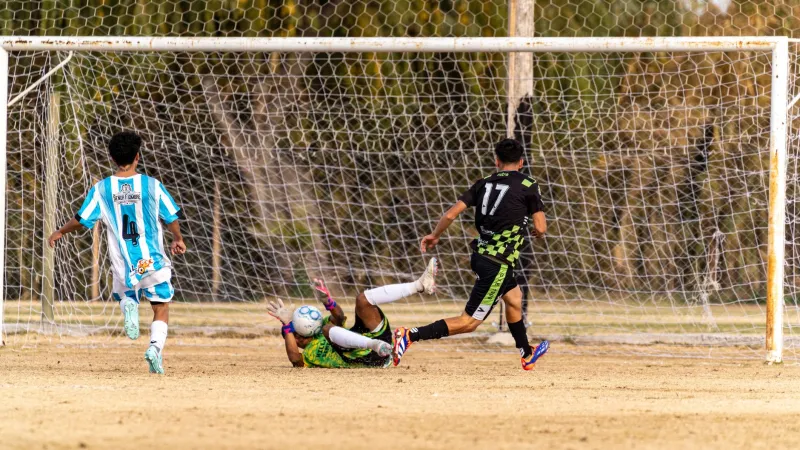
There is a particular kind of photograph that appears in nearly every youth sports program brochure, minor league team media guide, and community athletic organization newsletter across the country. The athlete is posed dynamically, often mid-action, frequently backlit with a dramatic rim of artificial light. The expression is intense. The composition is technically competent. And yet, somehow, the image communicates almost nothing meaningful about the person it depicts.
This is the problem with stock photography in the sports context, and it is a problem that Arizona's athletic community—one of the most active and rapidly growing in the American Southwest—can no longer afford to overlook.
Arizona's Sports Landscape Is Larger Than Most Realize
When people think of sports in Arizona, the conversation typically begins and ends with the state's major professional franchises. The Cardinals, the Suns, the Diamondbacks, the Coyotes—these organizations have the resources and the visibility to support robust in-house photography operations. But they represent only a small fraction of the athletic community that exists across this state.
Below the professional tier lies an enormous and largely underserved ecosystem of competitive athletics. Arizona is home to dozens of minor and independent league teams operating in sports ranging from baseball to hockey to soccer. Its university and collegiate athletic programs compete at multiple levels of national competition. Its high school sports scene is among the most competitive in the Western United States. And its youth athletics infrastructure—encompassing club teams, recreational leagues, and elite travel programs serving tens of thousands of young competitors across Maricopa, Pima, and Yavapai counties—is massive in both scale and community significance.
For the vast majority of these organizations and athletes, visual storytelling remains a secondary consideration. Photography budgets are modest. Content is often produced hastily, by generalist photographers who lack a deep understanding of athletic movement or narrative composition. And when original photography is unavailable entirely, stock imagery fills the gap—producing a visual language that is interchangeable, impersonal, and ultimately forgettable.
The Limits of the Generic Image
Stock photography exists to solve a logistics problem. When an organization needs an image of an athlete quickly and at minimal cost, a stock library delivers a technically acceptable result. But technical acceptability and emotional authenticity are not the same thing, and in the sports context, the gap between them is particularly consequential.
Athletes, coaches, and the communities that support them are perceptive audiences. They have spent years watching real competition—real effort, real failure, real triumph. They recognize immediately when an image reflects genuine athletic experience and when it reflects a staged approximation of it. Stock photography, no matter how skillfully produced, almost always reads as the latter. The movements are too clean. The expressions are too composed. The context is stripped away entirely, leaving an image that could depict anyone, anywhere, competing in anything.
This matters because sports photography, at its most effective, is not primarily about athletics. It is about character. The best images of athletes do not merely document physical performance—they reveal something essential about the individual: the stubborn determination visible in a distance runner's face at mile twenty, the quiet intensity of a young pitcher studying signals from the mound, the unguarded joy of a youth soccer player celebrating a first competitive goal. These are the images that communities connect with, that families preserve, and that organizations build meaningful identities around.
Technique in Service of Narrative
Capturing this kind of authentic athletic imagery requires a specific and sophisticated technical approach. Motion, in particular, is one of the most challenging subjects in all of photography. The human body in athletic competition moves with extraordinary speed and complexity, and the difference between an image that conveys explosive power and one that simply depicts blur is often a matter of shutter speed selection, predictive autofocus calibration, and positioning relative to the anticipated action.
Specialized sports photographers working in Arizona develop an intimate understanding of the sports they document. They learn the rhythms of each discipline—the predictable moments of peak physical expression in a baseball swing, the particular cadence of a basketball fast break, the precise instant during a wrestling match when leverage shifts and a competitor's resolve is most visibly tested. This knowledge allows them to anticipate rather than simply react, positioning themselves and their equipment to capture the decisive moment before it occurs.
Beyond the technical demands of motion capture, effective athlete storytelling requires an understanding of environmental context. Arizona's outdoor sporting environments are visually extraordinary—desert sunsets behind high school football stadiums, the long afternoon shadows that fall across youth baseball diamonds in the East Valley, the particular quality of early morning light at a Phoenix-area swim complex during summer training. A photographer who recognizes and responds to these environmental conditions produces images that feel specifically and authentically Arizonan, rather than generically athletic.
The Portrait Component: Stillness as Storytelling
Not all compelling sports photography involves movement. Some of the most powerful athlete images are portraits—deliberate, carefully composed studies of a person at rest that communicate as much about competitive character as any action sequence could. The weathered hands of a veteran minor league pitcher. The focused gaze of a young cross-country runner warming up before a state championship meet. The quiet confidence of a youth basketball player who has just finished a grueling practice session.
These portrait moments require a different set of skills than action photography, but they are equally demanding in their own way. Building the kind of rapport with an athlete that allows for genuine, unguarded expression takes time, patience, and a particular kind of interpersonal sensitivity. It also requires technical fluency in the use of natural and artificial light to sculpt a face, define a form, and create an image that feels simultaneously intimate and iconic.
What Arizona's Athletic Community Stands to Gain
The argument for investing in specialized sports photography is ultimately a practical one. Organizations that build visual identities around authentic, character-driven imagery of their athletes create deeper connections with their communities. Fans, families, sponsors, and media partners respond to images that feel real—images that reflect the genuine experience of competition and the genuine character of the people engaged in it.
For youth athletic programs in particular, the stakes are significant. The photographs produced of young competitors today become part of how those athletes understand their own athletic identities. Images that honor the effort, discipline, and individuality of young competitors communicate something important: that their participation matters, that their stories are worth telling, and that the people documenting their journeys are paying genuine attention.
Arizona's sports community is growing. Its athletes deserve photography that grows with them—photography that goes beyond the scoreboard and captures the full human dimension of what it means to compete.