Photographing the Family Enterprise: How Arizona's Multi-Generational Businesses Are Building Visual Legacies That Outlast Any Single Leader
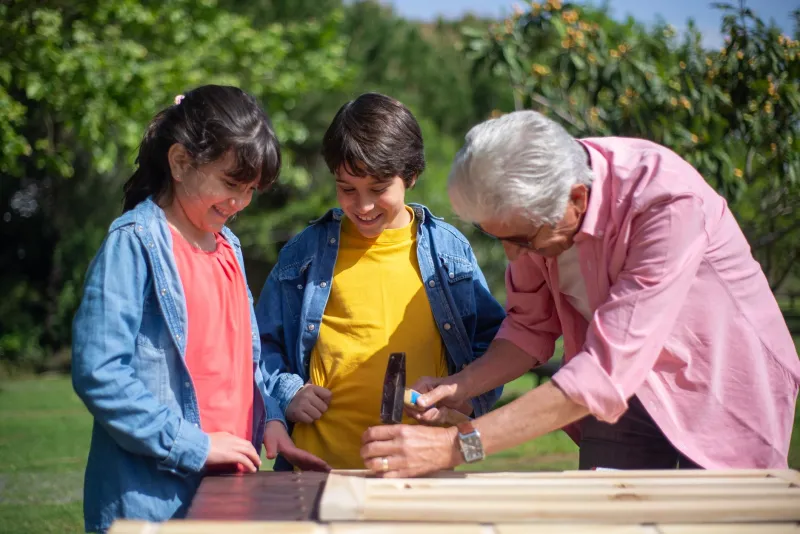
There is a particular kind of knowledge that lives inside a family business—knowledge that cannot be written into a policy manual or captured in a spreadsheet. It resides in the way a grandfather walks a job site, in the practiced motion of a third-generation farmer reading the soil, in the unspoken protocols that govern how a family enterprise treats its employees and its community. For decades, this knowledge passed quietly from one generation to the next through proximity and observation. Today, a growing number of Arizona's family-owned businesses are recognizing that professional photography offers a far more durable vessel for that inheritance.
Specialized commercial photography—when applied thoughtfully to the multi-generational enterprise—does something ordinary business portraiture cannot. It documents not just how a company looks, but how it operates, who it values, and what it stands for. That distinction matters enormously when a founding generation steps back and a successor generation steps forward.
The Challenge of Succession Without Visual Context
Succession planning is among the most complex undertakings any family business will face. Consultants, attorneys, and financial advisors all play essential roles in the technical mechanics of ownership transfer. Yet many succession plans neglect an equally important dimension: the cultural and emotional continuity of the enterprise.
When employees, clients, and community partners have worked alongside a founding figure for twenty or thirty years, the departure of that figure creates more than an operational gap. It creates a narrative gap—a moment when the company's story risks becoming unclear. Professional photography, deployed strategically across the arc of a business's life, fills that gap with something tangible and credible.
Consider a three-generation agricultural operation in the Sulphur Springs Valley. The founding couple built their enterprise through decades of early mornings, weather setbacks, and hard-won relationships with buyers and suppliers. Their children grew up working alongside them. Their grandchildren are now entering the business. Without a deliberate visual record, the institutional memory of that founding era—the equipment they used, the land they cultivated, the faces of longtime employees—begins to fade as soon as the founders step away. Specialized commercial photography creates an archive that resists that fading.
Documentary Photography as Institutional Memory
The most effective approach to family business photography borrows heavily from documentary traditions. Rather than staging a series of polished portraits in a conference room, a skilled commercial photographer embeds within the daily rhythms of the enterprise—following operations across shifts, seasons, and locations. The resulting images capture authenticity that posed photography cannot manufacture.
For a second-generation HVAC company in the Phoenix metro area, this approach might mean photographing technicians on rooftops during a summer installation, a sales team reviewing blueprints with a commercial client, and the founding owner walking the warehouse floor with his daughter—the incoming president—as she absorbs the operational knowledge that will soon be hers to steward. Each frame becomes a document. Together, they compose a visual history that communicates company culture more eloquently than any written mission statement.
This documentary approach also serves a practical human resources function. Long-tenured employees who have invested years in a family enterprise often feel genuine uncertainty during leadership transitions. A visual record that honors their contributions—that places their faces and their work at the center of the company's story—communicates that the incoming generation values continuity. That reassurance has measurable effects on retention and morale during what can otherwise be a destabilizing period.
The Brand Continuity Imperative
Arizona's family businesses operate across highly competitive markets. Whether a company provides custom cabinetry in Scottsdale, manages a cattle operation near Willcox, or runs a regional trucking fleet out of Tucson, its reputation is among its most valuable assets. That reputation is partly visual—embedded in the imagery the company uses across its website, its marketing materials, and its social media presence.
When leadership transitions occur without a coherent visual strategy, brand continuity suffers. A company that spent twenty years projecting a particular identity through its photography may find itself suddenly reliant on imagery that no longer reflects its current team, its current facilities, or its current positioning. Clients notice these discontinuities, even when they cannot articulate precisely what has changed.
Strategic commercial photography resolves this problem by creating a visual bridge. Imagery that deliberately frames the outgoing and incoming generations side by side—working together, sharing expertise, co-signing the company's values through their body language and environment—communicates to clients and partners that leadership is evolving, not rupturing. The company's visual identity carries forward with intention rather than by accident.
Specialized Photography for Specialized Enterprises
Not every family business requires the same photographic approach, and a photographer who understands this distinction is worth considerably more than one who does not. An agricultural operation demands familiarity with outdoor light conditions, equipment scale, and the seasonal rhythms that govern when meaningful images can be captured. A construction firm requires comfort working on active job sites, understanding safety protocols, and the compositional skill to make heavy machinery and structural steel visually compelling. A family-owned restaurant group presents an entirely different set of challenges, from controlled interior lighting to the kinetic energy of a working kitchen.
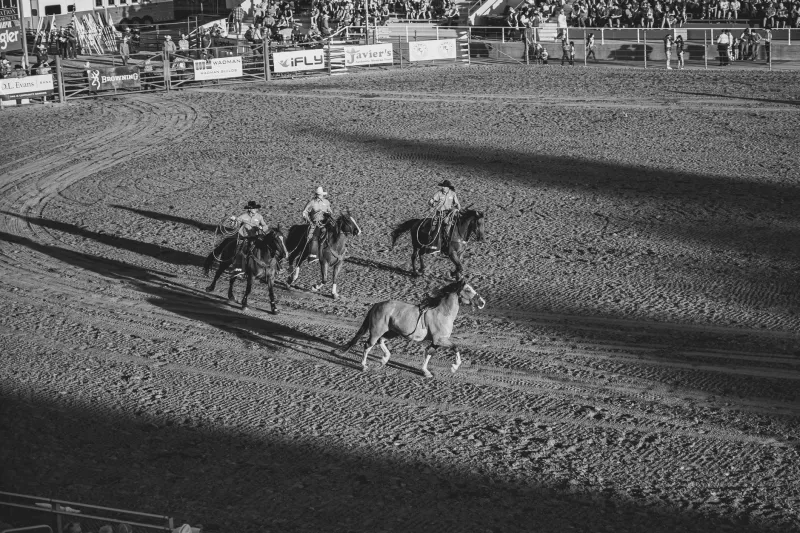
Arizona's geographic and economic diversity means that family businesses here span an unusually wide range of industries and environments. The high desert setting itself—its dramatic light, its iconic landscapes, its particular textures of adobe, rock, and sky—provides a visual context that can deepen the authenticity of family business photography when a photographer knows how to use it. A portrait taken at a family ranch near the Chiricahua Mountains carries a different weight than the same portrait taken against a neutral studio backdrop. The land itself becomes part of the story.
Building the Visual Archive: A Long-Term Investment
Perhaps the most important reframe for family business owners considering this investment is the shift from thinking about photography as a one-time project to understanding it as an ongoing practice. The businesses that derive the greatest value from specialized commercial photography are those that commission new work at regular intervals—capturing the company at different stages of growth, during significant transitions, and through the changing faces of the team.
Over time, this accumulation of imagery becomes something genuinely irreplaceable: a visual archive that tells the full story of an enterprise across its generations. When the third generation eventually prepares to hand the business to the fourth, they will not need to reconstruct that story from memory. It will already exist, frame by frame, in a collection of images that honors every chapter.
For Arizona's family businesses, that archive is not simply a marketing asset. It is a form of stewardship—a commitment to preserving what was built so that those who come next can understand, fully and viscerally, what they have inherited.