Before the First Nail: How Arizona's Elite Interior Design Firms Use Specialized Photography to Sell Premium Visions and Win High-Stakes Projects
In Scottsdale's luxury design studios and Phoenix's most sought-after architectural firms, a quiet revolution is underway. It has nothing to do with new materials, emerging color palettes, or the latest smart-home integration. It is, at its core, a revolution in persuasion—and specialized photography is leading it.
High-end interior designers have always faced a fundamental challenge: their most important work must be sold before it exists. A client considering a $1.2 million residential redesign cannot walk through the finished space, run a hand along the custom millwork, or feel the afternoon light cascade across hand-selected travertine. They are being asked to invest extraordinary sums in a future they can only imagine. The designer's task, then, is not simply to create beauty—it is to make that beauty credible, tangible, and emotionally compelling long before construction commences.
This is precisely where specialized photography enters the equation.
The Limitations of Renderings Alone
Three-dimensional renderings have become standard practice across the interior design industry, and their quality has improved dramatically over the past decade. Yet even the most sophisticated digital model carries an inherent liability: it reads as a rendering. Sophisticated clients—the very clients Arizona's luxury design firms are courting—recognize the difference between a computer-generated image and a photograph. That recognition, however subtle, introduces doubt.
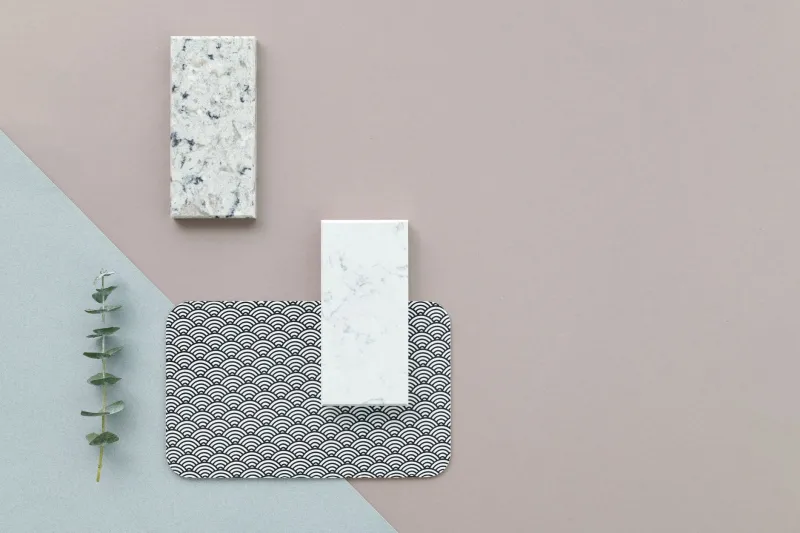
When a designer supplements or reframes those renderings through the lens of a skilled commercial photographer, something significant shifts. Photographed mood boards, material flat-lays, and carefully staged vignettes carry a documentary weight that digital models cannot replicate. The camera's relationship to light, texture, and dimension communicates authenticity in a way that even the most technically accomplished rendering cannot fully achieve.
Arizona's most progressive design firms have recognized this distinction and are investing accordingly.
Photographing What Doesn't Yet Exist
The technical demands of pre-construction design photography are considerable and frequently underestimated. Unlike architectural photography of a completed space—where the photographer's primary challenge is managing natural and artificial light within a defined environment—pre-construction photography requires building a convincing visual narrative from fragments.
Material samples must be lit to reveal their true character: the depth of a quartzite slab, the directional grain of white oak flooring, the way a particular fabric absorbs or reflects ambient light. Flat-lay compositions of curated material boards demand the same precision as high-end product photography, with the added responsibility of communicating how those elements will interact with one another at scale.
Staged vignettes—small, fully realized corners or tableaus assembled from actual materials and furnishings—present their own set of challenges. The photographer must collaborate closely with the design team to ensure that every element within the frame serves the broader narrative. A single misaligned accessory or an unflattering angle can undermine the entire composition, eroding the client's confidence rather than building it.
In Arizona's climate, natural light is both an asset and a variable that demands careful management. The intensity of Sonoran Desert sun can bleach delicate material tones or introduce unwanted warmth to cooler palettes. Professional photographers working in this specialty develop an intimate understanding of how to harness, diffuse, and direct Arizona's distinctive light to serve a specific design vision—rather than allowing it to dominate or distort.
Building Client Confidence Through Visual Precision
For Arizona's luxury interior design clientele—often high-net-worth individuals, corporate real estate developers, and hospitality groups—the investment in a major design project is never purely aesthetic. It is also financial, reputational, and frequently tied to broader business objectives. These clients require more than inspiration; they require confidence.
Professionally photographed design presentations serve a specific psychological function in this context. When a designer presents a proposal supported by beautifully composed, technically precise imagery, the implicit message is one of discipline, attention to detail, and professional rigor. The photography itself becomes evidence of the designer's capabilities—a demonstration, rather than merely a promise.
Design firms across the Scottsdale and Paradise Valley corridors have reported measurable differences in client approval rates when proposals are accompanied by high-quality photographic documentation versus digital renderings alone. The photography does not replace the designer's verbal presentation or the underlying quality of the concept. It amplifies both, providing a visual anchor around which the client's imagination can organize itself.
The Role of Lifestyle Imagery in Justifying Premium Fees
Beyond material documentation and staged vignettes, lifestyle photography plays an increasingly important role in Arizona's luxury design market. These images do not depict specific materials or furniture selections. Instead, they evoke the experiential quality of a finished space—the feeling of a Sunday morning in a perfectly appointed kitchen, the quiet authority of a home office designed for serious work, the effortless elegance of an outdoor entertaining area conceived for Arizona's celebrated indoor-outdoor living culture.
This category of imagery is particularly valuable when a designer is working to justify a premium fee structure. Clients who might hesitate at a detailed cost breakdown respond viscerally to imagery that captures the quality of life their investment will produce. The photograph bypasses the analytical mind and speaks directly to aspiration—which is, ultimately, what luxury design is selling.
Capturing this quality of imagery in a pre-construction context requires a photographer who understands both the technical demands of lifestyle photography and the specific vocabulary of high-end interior design. It is a genuinely specialized skill set, and Arizona's most discerning design firms have learned to distinguish between generalist photographers and those who bring deep expertise to this particular intersection.
Collaboration as the Foundation of Effective Design Photography
The most successful pre-construction photography engagements in Arizona share a common characteristic: they are built on genuine creative collaboration between the photographer and the design team. The photographer who arrives on set without a thorough understanding of the project's design intent, target client profile, and intended presentation context will produce technically competent images that fail to serve the designer's specific needs.
Conversely, when a photographer is brought into the design process early—participating in material selection conversations, reviewing presentation strategies, and contributing a visual perspective to the overall communication plan—the resulting imagery is invariably more precise, more persuasive, and more aligned with the designer's vision.
This collaborative model is not yet universal across Arizona's design industry, but it is becoming the standard among firms that compete at the highest levels of the luxury market. The investment in a photographer who functions as a genuine creative partner, rather than a vendor engaged at the final stage of the proposal process, consistently produces a measurable return.
Arizona's Unique Design Market and the Photography It Demands
Arizona's interior design landscape is distinctive in ways that directly shape the photography it requires. The state's luxury residential market spans dramatically different aesthetic traditions—from the clean, mineral palette of contemporary desert modernism to the warm, layered richness of Southwestern traditionalism to the imported Mediterranean and Spanish Colonial influences that define significant portions of Scottsdale and Sedona's luxury housing stock.
A photographer specializing in pre-construction design imagery in Arizona must be fluent in all of these visual languages. The lighting approach, compositional choices, and color management strategies that serve a sleek, minimalist Paradise Valley residence are fundamentally different from those required to communicate the warmth and handcrafted quality of a Sedona retreat. This fluency is not incidental—it is the core competency that separates photographers who serve Arizona's design community with genuine distinction from those who offer a one-size-fits-all approach.
For interior design firms competing in this environment, the choice of photographer is not a logistical decision. It is a strategic one—with direct implications for client acquisition, fee justification, and long-term brand positioning in one of the American Southwest's most dynamic luxury markets.