Chrome, Curves, and Desert Light: The Specialized Art of Photographing Arizona's Luxury and Classic Automobiles
Arizona occupies a singular position in the American automotive world. The state hosts some of the nation's most celebrated collector car events, attracts high-net-worth enthusiasts from across the country, and offers a physical landscape so dramatic that even the most storied European coachwork looks freshly inspired when placed against a backdrop of red rock formations or a Sonoran Desert horizon. Yet for all of this natural advantage, capturing an automobile's true character on camera demands far more than favorable geography. It demands a specialized photographer who understands both the machine and the medium.
For collectors, dealerships, and automotive brands operating throughout Arizona, the difference between competent documentation and genuine visual storytelling can translate directly into auction results, showroom traffic, and long-term brand perception. The vehicles themselves—whether a pre-war Duesenberg, a contemporary Lamborghini, or a meticulously restored muscle car—represent years of craftsmanship, significant financial investment, and, in many cases, deeply personal histories. They deserve imagery that reflects all of that weight.
Why Automotive Photography Is a Genre Unto Itself
It is tempting to assume that any accomplished photographer can pivot to automotive work with minimal adjustment. That assumption consistently proves costly. Automobiles present a unique set of photographic challenges that differ fundamentally from portraiture, architecture, or even product photography.
The reflective surfaces of a well-polished vehicle act as mirrors, capturing everything in the surrounding environment—including the photographer, the camera, and any unintended clutter. Managing those reflections requires an intimate understanding of light behavior, careful positioning, and often the use of specialized equipment such as polarizing filters, large diffusion panels, or carefully constructed lighting rigs. A single uncorrected reflection on a chrome bumper can undermine an otherwise flawless image.
Beyond reflections, automotive photographers must develop an intuitive sense of a vehicle's most flattering angles. Every model has a hero perspective—a specific combination of elevation, distance, and rotation that communicates its proportions most effectively. Finding that angle requires studying the car's design language, understanding what the manufacturer or restorer intended to emphasize, and then translating that understanding into a deliberate compositional choice.
Arizona's Landscape as a Collaborator
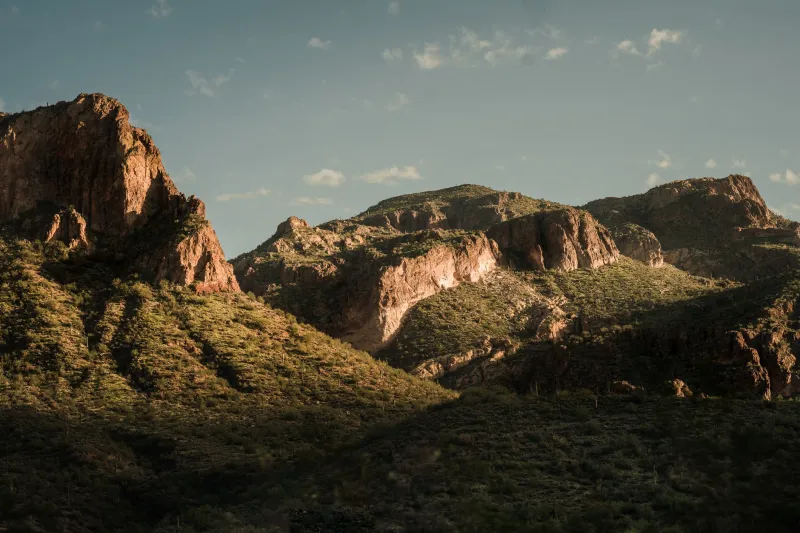
Few environments in the United States offer the photographic diversity available within Arizona's borders. Within a few hours' drive from metropolitan Phoenix or Tucson, a photographer can access open salt flats, towering saguaro forests, twisting mountain roads, and the kind of wide-open desert straightaways that seem purpose-built for automotive imagery.
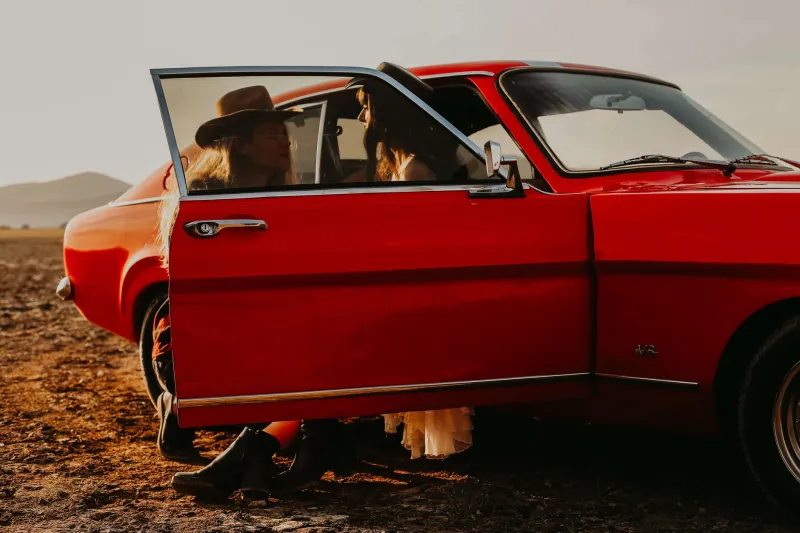
The state's famously abundant sunshine, however, is a double-edged asset. Midday light in the Sonoran Desert is harsh, creating deep shadows and blown-out highlights that flatten a vehicle's dimensional form. Professional automotive photographers in Arizona learn to work within the same golden windows that landscape specialists prize—the hour following sunrise and the period preceding sunset—when low-angle light rakes across body panels, emphasizing contours and bringing metallic finishes to life in ways that overhead illumination simply cannot replicate.
Seasonal timing also matters considerably. The monsoon season, while dramatic, introduces atmospheric moisture and unpredictable cloud formations that can either elevate or complicate a shoot. Spring and autumn, by contrast, offer more stable conditions and the kind of crystalline air clarity that makes distant mountain ranges appear almost within reach—a quality that adds exceptional depth to wide establishing shots featuring a vehicle in context.
Serving Arizona's Collector Car Community
Scottsdale's January auction week draws international attention each year, with major houses presenting hundreds of significant vehicles to a global audience of collectors and investors. The photography supporting those auction listings plays a measurable role in buyer confidence and, ultimately, in final sale prices. Poorly lit, carelessly composed images communicate neglect regardless of a vehicle's actual condition. Conversely, imagery that captures a car's presence, its patina, its mechanical integrity, and its aesthetic character invites serious bidders to engage.
Beyond auction documentation, Arizona's collector community includes private sellers, estate liquidations, and restoration shops whose work deserves equally thoughtful visual representation. A shop that has invested eighteen months and considerable resources in a frame-off restoration of a 1967 Shelby GT500 should not present that work through snapshots taken with a smartphone under fluorescent shop lighting. The photography should honor the craftsmanship with equivalent care.
Dealership and Commercial Automotive Applications
Luxury and exotic dealerships throughout the Phoenix metropolitan area, Scottsdale, and Tucson face an increasingly competitive digital marketplace. Prospective buyers frequently conduct extensive online research before ever visiting a showroom, meaning that website and social media imagery often constitutes a customer's first meaningful impression of both the vehicle and the dealership's brand standards.
Specialized automotive photography for dealerships extends beyond simple inventory documentation. It encompasses lifestyle imagery that places vehicles in aspirational Arizona contexts—a convertible navigating the curves above Sedona, a high-performance SUV positioned against the Superstition Mountains at dusk, or a luxury sedan framed by the architectural lines of a Scottsdale estate. This contextual storytelling communicates not merely what a vehicle looks like, but what ownership of that vehicle might feel like.
Motorcycle dealerships, RV retailers, and specialty vehicle outfitters face comparable challenges and benefit from the same specialized approach. The underlying discipline—understanding light, surface, and narrative—transfers across vehicle categories.
The Technical Toolkit of a Serious Automotive Photographer
Professional automotive photography draws on a broader range of techniques than most clients initially anticipate. Long-exposure motion shots, sometimes called panning images, require precise camera movement synchronized with a moving vehicle to render the subject in sharp focus against a dramatically blurred background—communicating speed and energy in a single frame. Light painting, performed in controlled nighttime environments, allows photographers to selectively illuminate specific body panels and mechanical details with handheld light sources, producing images of extraordinary drama and depth.
Drone-based aerial photography adds another dimension, particularly useful for establishing shots that situate a vehicle within Arizona's grand landscape or for capturing the visual rhythm of a convoy of collector cars navigating a desert highway. The integration of aerial and ground-level perspectives within a single editorial package provides clients with a comprehensive visual vocabulary that serves multiple platforms and purposes.
Post-processing discipline is equally important. Skilled automotive retouching corrects unavoidable reflection issues, enhances tonal depth, and ensures color accuracy—particularly critical when a vehicle's specific paint code carries financial or historical significance. The goal is always to reveal the vehicle's authentic character more clearly, never to fabricate qualities it does not possess.
A Specialized Investment with Measurable Returns
For Arizona's automotive community—whether collectors protecting generational assets, dealerships competing for affluent buyers, or restoration professionals marketing their expertise—specialized photography represents one of the highest-return investments available. The images produced by a photographer who genuinely understands this genre do not merely document a vehicle. They advocate for it, positioning it favorably in the minds of the people whose decisions matter most.
Arizona's landscape, its automotive culture, and its community of serious enthusiasts collectively create conditions in which this specialized craft can reach its full expression. The vehicles are here. The light is extraordinary. The only remaining question is whether the photography does justice to both.