Steel, Shadow, and Desert Sun: The Specialized Craft of Arizona Industrial Photography
Arizona's industrial landscape has undergone a remarkable transformation over the past decade. The Phoenix metropolitan area, Tucson's manufacturing corridor, and the rapidly developing regions along the I-10 and I-17 corridors are now home to semiconductor fabrication facilities, lithium-ion battery plants, data centers, and aerospace manufacturing complexes that represent billions of dollars in infrastructure investment. These structures are not merely functional—they are, in many respects, architectural statements that reflect the ambitions of the companies that built them.
Yet photographing these environments demands a discipline that few generalist photographers possess. The interplay of Arizona's intense desert sunlight with polished metal cladding, industrial glass panels, and expansive concrete surfaces creates a photographic puzzle that requires both scientific understanding and refined creative instinct.
The Physics of Desert Light on Industrial Surfaces
Photographers who work primarily in commercial real estate or portraiture often underestimate the complexity of industrial light environments. Arizona's sun, particularly during the summer months, produces UV index readings that routinely exceed 10—a level that generates extreme contrast ratios between illuminated metal surfaces and the shadows they cast.
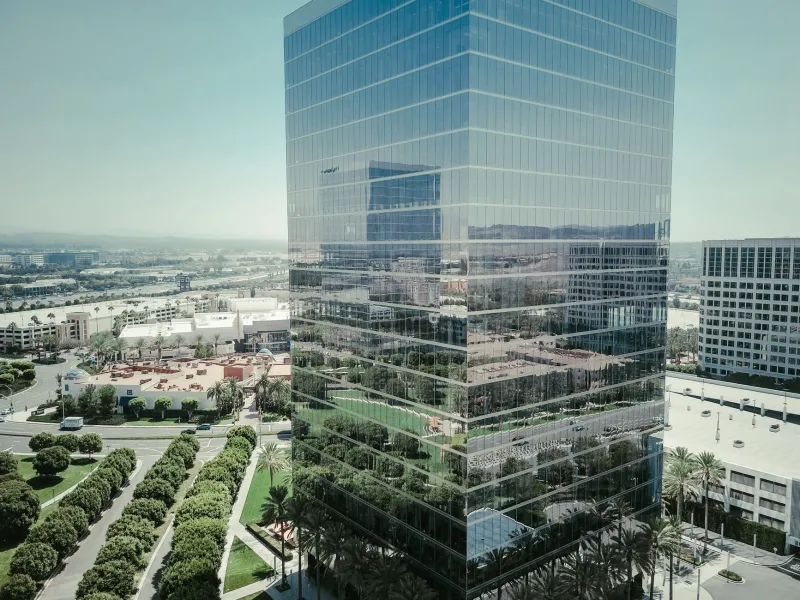
When direct sunlight strikes a polished aluminum panel at a low angle, the resulting specular highlight can easily blow out an entire image sensor, rendering detail in adjacent shadowed areas completely unrecoverable. Managing this dynamic range requires a deliberate approach to exposure bracketing, a thorough understanding of HDR compositing techniques, and—critically—the judgment to recognize when post-processing simply cannot compensate for a poorly timed capture.
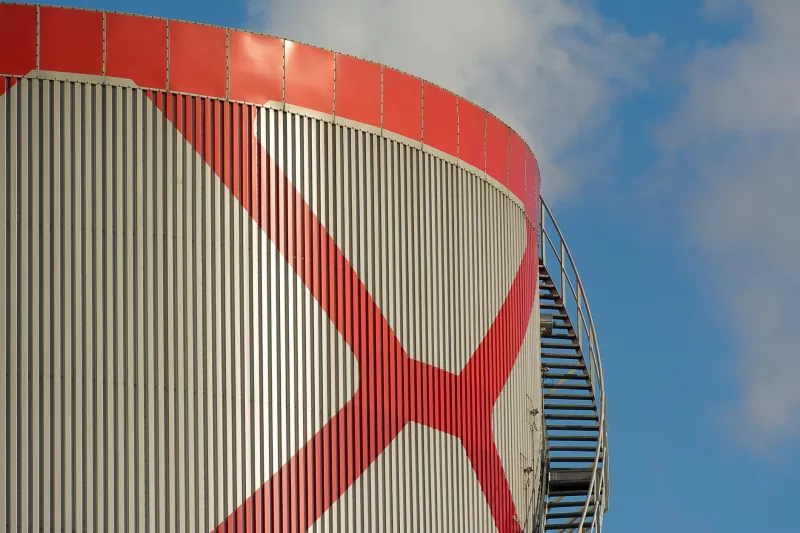
Experienced industrial photographers working in Arizona have developed a nuanced relationship with the state's seasonal light patterns. Early morning during the spring months, for instance, offers a brief window of approximately forty minutes after sunrise during which soft, directional light rakes across corrugated metal facades at angles that reveal texture without overwhelming the sensor. Conversely, the diffused light of an overcast monsoon sky—rare in Arizona but not unknown between July and September—can transform an otherwise harsh industrial scene into a study of subtle gradation.
Lenses, Perspective, and the Architecture of Scale
Industrial structures in Arizona frequently operate at a scale that challenges conventional photographic framing. A data center campus west of Chandler might stretch across forty acres of desert terrain, while a semiconductor fabrication building in Goodyear could stand six stories tall with a footprint larger than several city blocks.
Capturing meaningful images of such environments requires deliberate decisions about focal length and perspective. Wide-angle lenses—particularly those in the 16mm to 24mm range on full-frame systems—allow photographers to encompass the sheer mass of these structures while maintaining the kind of dramatic foreground interest that gives industrial imagery its visual weight. However, extreme wide-angle perspectives introduce distortion that can misrepresent the geometry of carefully engineered structures, a concern that industrial clients take seriously when images are intended for investor relations materials or regulatory filings.
Tilt-shift lenses, long favored by architectural photographers, have found a natural application in Arizona's industrial sector. By correcting converging verticals in-camera, these specialized optics produce images that convey structural integrity and engineering precision—qualities that resonate deeply with the engineers, executives, and procurement officers who are frequently the intended audience for industrial photography.
Navigating Safety Protocols Without Compromising Creativity
Perhaps the most distinctive aspect of professional industrial photography in Arizona is the requirement to operate within stringent safety frameworks. Many of the state's largest manufacturing facilities—particularly those in the semiconductor and aerospace sectors—maintain safety protocols that govern everything from the type of footwear worn on the production floor to the proximity of camera equipment to active machinery.
Photographers who specialize in this niche must arrive at a shoot fully prepared. This means completing facility-specific safety orientations, understanding OSHA standards relevant to the environments in which they are working, and carrying personal protective equipment appropriate to each unique site. At a Mesa-area electronics assembly facility, that might mean anti-static wrist straps and cleanroom-compatible camera covers. At a Tucson aerospace maintenance hangar, it could involve fall protection certification and a detailed understanding of the facility's hot-work permit system.
This operational complexity is not a burden—it is a differentiator. Industrial clients in Arizona have learned, often through disappointing experiences with photographers who lacked this preparation, that technical photographic skill alone is insufficient. A photographer who cannot move confidently through a regulated industrial environment will inevitably produce compromised results, both in image quality and in the trust they establish with facility managers.
How Arizona Industrial Businesses Are Leveraging Specialized Imagery
The business case for professional industrial photography in Arizona has never been stronger. Several local companies have undergone measurable brand transformations by investing in high-quality visual documentation of their facilities.
A Phoenix-based logistics firm that operates a network of climate-controlled distribution centers recently undertook a comprehensive photography project with the explicit goal of differentiating its facilities from competitors in marketing materials directed at pharmaceutical supply chain clients. By commissioning images that emphasized the precision of temperature monitoring systems, the cleanliness of receiving docks, and the scale of automated sorting infrastructure, the company was able to communicate operational capability in a way that written copy alone could not achieve.
Similarly, several of Arizona's growing number of data center operators—many of which have established campuses in the East Valley specifically to take advantage of the state's favorable regulatory environment and energy infrastructure—have recognized that prospective enterprise clients want visual assurance of physical security, redundant power systems, and orderly cable management. Professional industrial photography provides that assurance in a format that is immediately accessible and persuasive.
The Role of Aerial and Drone Perspectives
Arizona's flat desert terrain and generally clear skies make it an exceptional environment for aerial industrial photography. Drone-mounted cameras, operated by FAA Part 107-certified pilots, have become an essential tool for conveying the full scope of large industrial campuses in a single compelling image.
An aerial perspective of a manufacturing campus situated against the backdrop of the McDowell Mountains or the Estrella range does more than document infrastructure—it places the facility within the broader Arizona landscape in a way that carries genuine marketing power. For companies recruiting engineering talent from out of state, imagery that simultaneously communicates industrial capability and quality of life is an asset with real strategic value.
The discipline of industrial photography in Arizona is, at its core, a practice of translation. It takes environments that most people never see—the controlled interiors of cleanrooms, the organized complexity of a busy fabrication floor, the geometric precision of a data center cooling system—and renders them in visual terms that are both accurate and compelling. For Arizona's manufacturing and technology sectors, that translation is increasingly essential.