Objects of Consequence: The Specialized Art of Photographing Arizona's Historical and Indigenous Collections
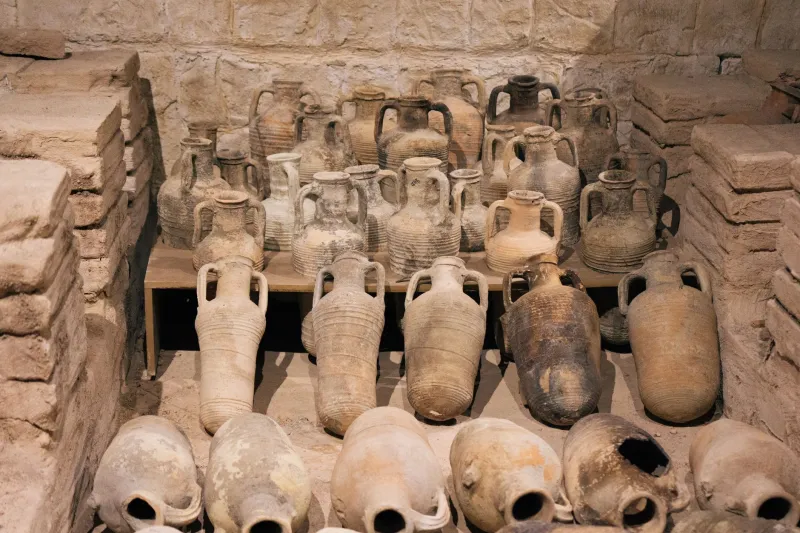
In a climate-controlled storage room at a Tucson museum, a Hohokam ceramic vessel rests in archival tissue—its surface etched with geometric patterns that predate the arrival of European explorers by eight centuries. In a Flagstaff historical society, a collection of territorial-era photographs documents Arizona's earliest Anglo settlements with a fragility that makes handling them a carefully managed privilege. Across the state, in tribal cultural centers and university special collections, objects of profound historical and cultural weight await the kind of documentation that will allow them to outlast even the most carefully managed physical preservation.
Professional artifact and archival photography is the discipline that bridges these collections and the communities they serve. It is exacting, ethically complex, and strategically essential for institutions whose missions depend on making the past both accessible and meaningful.
Why Artifact Photography Is a Distinct Specialty
It is tempting to assume that photographing objects is simpler than photographing people or landscapes. In practice, the opposite is frequently true. Artifacts present a constellation of technical demands that challenge even experienced commercial photographers who lack specific curatorial training.
Texture, surface reflectivity, and dimensional form must all be rendered with accuracy in a two-dimensional medium. A Navajo textile woven with natural dyes requires lighting calibrated to reveal the subtle variation in fiber color without washing out the pattern or introducing color casts that would misrepresent the object's appearance. A Spanish colonial-era silver reliquary presents reflective surfaces that can defeat conventional lighting arrangements, requiring careful use of diffusion panels, polarizing filters, and precise angle management to reveal form without generating distracting specular highlights.
Color accuracy is not merely an aesthetic concern—it is a scholarly requirement. When a photograph enters a digital catalog or an academic publication, it becomes a reference document that researchers may rely upon when the physical object is unavailable for examination. Inaccurate color reproduction is not simply a quality deficiency; it is a form of misinformation that can corrupt scholarship.
The Ethical Dimension of Cultural Photography
Arizona occupies a particular position in the landscape of American cultural heritage photography because of the depth and breadth of its Indigenous history. The state is home to twenty-two federally recognized tribal nations, each with its own cultural protocols governing the representation and documentation of sacred objects, ceremonial materials, and ancestral belongings.
For photographers working with tribal cultural institutions, ethical engagement is not optional—it is foundational. This means entering into genuine consultation with tribal cultural staff before any photography commences, understanding which objects carry restrictions on their visual representation, and accepting that some materials may not be photographed at all, regardless of their visual significance.
This is not a constraint that diminishes the work. It is a framework that elevates it. Photographers who approach tribal collections with the humility and respect that the subject demands earn the trust that allows them to document materials of extraordinary cultural significance—objects that might otherwise remain inaccessible to broader audiences precisely because the institutions stewarding them have no reliable way to share them responsibly.
The Native American Graves Protection and Repatriation Act (NAGPRA) has also shaped how museums approach the documentation of ancestral remains and associated funerary objects. Professional photographers working in this domain must understand the legal and ethical landscape well enough to support institutions in their compliance obligations while producing documentation that serves legitimate scholarly and repatriation purposes.
From Storage to Screen: Building Digital Collections
One of the most consequential applications of artifact photography in Arizona's cultural institutions is the development of digital collections that extend institutional reach far beyond physical walls. The Arizona State Museum, the Heard Museum, the Arizona Historical Society, and dozens of smaller regional collections have invested significantly in digitization programs that allow researchers, educators, and members of the public to access objects without requiring physical presence.
Effective digitization photography demands consistency above all else. When a collection contains thousands of objects photographed over multiple sessions, maintaining uniform lighting, background standards, color calibration, and resolution ensures that the resulting catalog functions as a coherent research resource rather than a patchwork of incompatible images. This requires photographers to establish and document technical protocols that can be replicated across extended project timelines, sometimes spanning years.
The payoff for institutions is substantial. Digital collections drive web traffic, support grant applications, enable traveling exhibition development, and provide the visual assets that fuel the social media and email marketing programs through which cultural institutions increasingly communicate with donors and prospective visitors. A beautifully photographed Hopi katsina figure, rendered with the accuracy and visual clarity that professional lighting and calibrated color management provide, can become the centerpiece of a fundraising campaign that secures the resources to conserve the physical collection it represents.
Exhibition Photography and the Visitor Experience
Beyond archival documentation, professional photography serves Arizona's cultural institutions in the development of exhibition materials that shape how visitors encounter collections. Large-format exhibition prints, interactive display graphics, catalog illustrations, and wayfinding imagery all draw on the same body of photographic work—which means that images must serve multiple purposes simultaneously.
An artifact photograph that works as a catalog reference image must also function as a compelling visual element in a printed exhibition guide and as an attention-capturing graphic in digital marketing materials. This requires photographers to think beyond the immediate technical assignment and consider how each image will perform across its full range of applications.
Arizona's cultural tourism economy—which draws visitors to destinations including Monument Valley, Tumacácori National Historical Park, and the Arizona State Museum—depends in part on the quality of visual materials that inspire travel decisions. When a prospective visitor encounters a stunning photograph of a polychrome Salado ceramic bowl in an online article about Tucson's museum offerings, that image is performing economic work on behalf of the institution and the community it serves.
Preserving What Cannot Be Replaced
The most sobering dimension of artifact photography is its role as a form of preservation insurance. Physical objects are vulnerable—to fire, flood, theft, deterioration, and the inevitable consequences of time. A comprehensive photographic record does not replace a lost artifact, but it preserves the object's documented existence in a form that supports scholarship, legal documentation, and the cultural memory of the communities to whom these objects belong.
For Arizona's cultural institutions, commissioning professional artifact photography is an act of institutional responsibility that extends well beyond the immediate communications needs it serves. It is a commitment to ensuring that the objects in their care—and the histories those objects carry—remain accessible to future generations regardless of what physical circumstances may intervene.
That is work of genuine cultural weight, and it deserves the technical precision, ethical seriousness, and artistic sensitivity that specialized photography brings to every object it records.