From Chaos to Chronicle: The Art of Storytelling Photography at Arizona's Most Vibrant Events
There is a meaningful difference between a photographer who attends an event and one who interprets it. The former returns with a collection of accurately exposed, sharply focused images. The latter returns with a narrative—a sequence of photographs that conveys atmosphere, emotion, and the particular character of an occasion that no attendee could have fully absorbed in real time. In Arizona, where the event landscape ranges from world-class art festivals to intimate Sonoran Desert weddings, the distinction between documentation and storytelling is the defining measure of professional excellence.
Arizona's event photography market is demanding in ways that are both obvious and subtle. The obvious challenges are environmental: relentless sunlight, dramatic temperature swings, dust storms that materialize with little warning, and venues that span everything from air-conditioned convention halls to open-air amphitheaters with no shade whatsoever. The subtler challenges are editorial—understanding which moments carry narrative weight, how to move through a crowd without disrupting the energy you are trying to capture, and how to maintain visual consistency across a twelve-hour assignment that passes through a dozen different lighting conditions.
Understanding Arizona's Event Landscape
Before discussing technique, it is worth appreciating the breadth of Arizona's event culture, because each genre presents its own photographic demands.
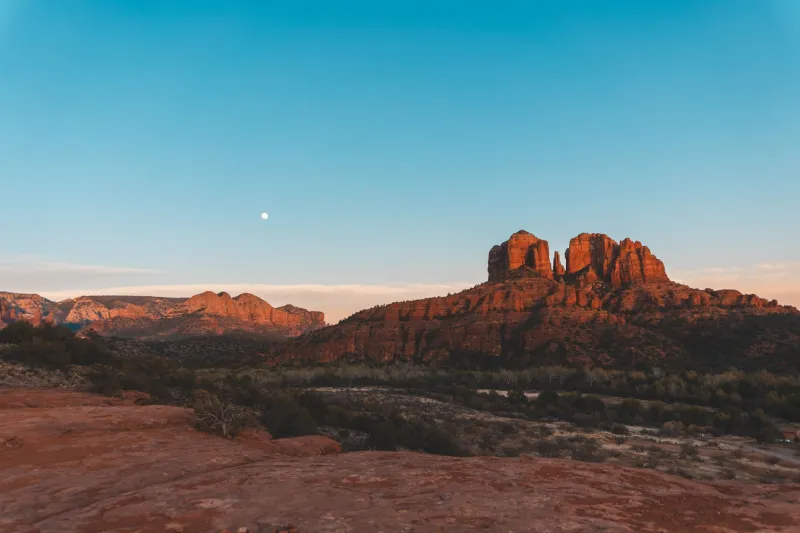
Sedona's arts festivals—particularly the Sedona Arts Festival held each autumn against the backdrop of Cathedral Rock—blend fine art, performance, and landscape in a way that rewards a photojournalistic sensibility. The red rock formations are not merely scenery; they are participants in the visual story, and a skilled photographer incorporates them into compositions without allowing them to overshadow the human activity in the foreground.
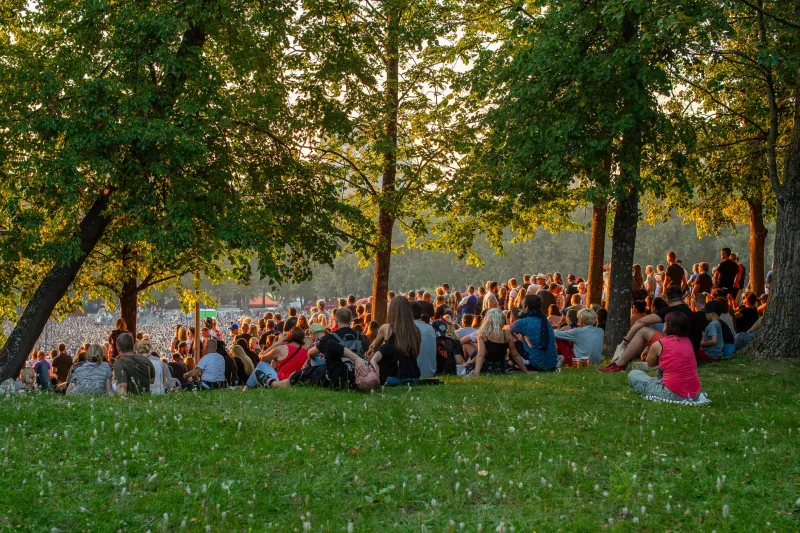
Phoenix's cultural calendar is considerably more urban in character. Events such as the McDowell Mountain Music Festival, Día de los Muertos celebrations in the Roosevelt Row arts district, and the State Fair draw tens of thousands of attendees and present photographers with the challenge of finding intimate, personal moments within large, kinetic crowds. The visual vocabulary here is different—tighter focal lengths, faster shutter speeds, and a willingness to position oneself in uncomfortable places in pursuit of the right angle.
Desert weddings occupy a category of their own. Arizona's dramatic terrain has made it one of the most sought-after wedding destinations in the American Southwest, attracting couples from across the country who want their ceremony framed by saguaro cacti, canyon walls, or the otherworldly landscape of the White Tank Mountains. These assignments combine the narrative demands of editorial photography with the client-service expectations of portraiture—a combination that requires both artistic flexibility and professional discipline.
Managing Arizona's Most Persistent Challenge: The Sun
No single factor shapes event photography in Arizona more consistently than sunlight. The state receives more annual sunshine than nearly anywhere else in the continental United States, and while that abundance is part of Arizona's appeal, it creates conditions that can defeat a photographer who is not technically prepared.
Midday sun in Phoenix during summer months produces light so harsh and directional that it renders faces in deep shadow under hat brims, bleaches color from clothing and backgrounds, and creates contrast ratios that exceed the dynamic range of any camera sensor currently available. The solution is rarely to simply expose for the highlights or the shadows—it is to manage the light itself.
For outdoor events with some degree of scheduling flexibility, the single most effective technique is timing. Photography during the first and last two hours of daylight transforms Arizona's light from an adversary into one of the most beautiful natural lighting environments on earth. The warm, low-angle illumination characteristic of these periods wraps subjects in a quality of light that is nearly impossible to replicate artificially.
When midday coverage is unavoidable—as it frequently is at multi-day festivals and all-day outdoor celebrations—experienced Arizona event photographers rely on a combination of fill flash, reflectors, and strategic positioning relative to available shade. A portable speedlight used as fill at roughly one to two stops below ambient exposure can restore shadow detail to a subject's face without creating the artificial, overly lit appearance that flash-heavy photography often produces.
Understanding how to expose for backlit subjects is equally essential. Arizona's golden-hour events frequently place subjects between the camera and a brilliant western sky. Photographers who expose for the background produce silhouettes; those who expose for the subject lose all sky detail. The professional approach—using exposure compensation, spot metering on the subject's face, and supplemental fill light when necessary—preserves both elements and creates images with the kind of luminous quality that distinguishes professional event coverage.
The Editorial Mindset: Building a Visual Narrative
Technical proficiency is the foundation of event photography, but narrative construction is its highest expression. A client reviewing a gallery of five hundred event images should be able to experience the occasion sequentially—arriving with the first guests, moving through the energy of the main event, and concluding with the quiet, reflective moments that follow the peak of activity.
Achieving this requires intentional sequencing before the camera is ever raised. Before an event begins, a thoughtful photographer walks the venue, identifies the key narrative beats—the opening ceremony, the keynote speaker, the moment a crowd first encounters a featured artist's work—and develops a loose shot list that ensures coverage of each. This planning does not constrain spontaneity; it provides a structural framework within which spontaneous moments can be recognized and captured when they occur.
Variety of perspective is the other essential element of narrative photography. A gallery composed entirely of wide environmental shots feels impersonal; one composed entirely of tight portraits feels claustrophobic. The most compelling event coverage moves fluidly between scale—establishing the context of a scene, moving into the mid-range to capture interaction, and then closing to the detail level where genuine emotion lives. A child's expression at a cultural festival, the hands of a potter at a Sedona craft fair, the first look between partners at a desert wedding ceremony—these are the images that transform a competent assignment into a meaningful one.
Adapting to Unpredictable Desert Conditions
Arizona's weather, particularly during the monsoon season between June and September, can alter an event's character with remarkable speed. A haboob—the wall of dust that precedes monsoon storms—can reduce visibility to near zero within minutes, while the storms themselves bring lightning, wind, and rain that challenge both equipment and safety.
Prepared event photographers carry weather-sealed camera bodies and lenses as standard equipment for any outdoor Arizona assignment during these months. Equally important is the ability to recognize a haboob's approach early enough to protect equipment and reposition toward covered areas before conditions deteriorate. These moments, handled well, also produce some of the most dramatic event photographs imaginable: a festival crowd reacting to an incoming wall of dust, performers continuing despite gathering clouds, a wedding party laughing as desert wind catches a veil. Adversity, photographed with skill, becomes part of the story.
Consistency as a Professional Standard
Across all of these variables—changing light, shifting venues, unpredictable weather, and the relentless pace of a live event—maintaining editorial consistency is the mark of a truly professional event photographer. Clients who commission coverage of a multi-day festival or a full-day wedding expect a final gallery that feels cohesive, as though produced by a single artistic vision rather than assembled from disconnected moments.
This consistency is achieved through disciplined post-processing workflows, careful management of white balance settings in-camera, and a clear aesthetic sensibility established before the assignment begins. It is the quality that transforms a collection of photographs into a lasting record of an occasion—and it is the standard to which Arizona Specialty Photography holds every event assignment we undertake.