Pixels, Drones, and Dollars: How Specialized Photography Is Reshaping Arizona's Commercial Real Estate Market
For decades, a standard-issue camera and a steady hand were considered sufficient tools for photographing commercial properties in Arizona. A wide-angle shot of a lobby, a few exterior frames taken on a clear afternoon, and the listing was considered ready. That era has passed. Today, the state's commercial real estate industry operates in a visual economy where the quality of photography directly influences leasing velocity, investor interest, and ultimately, the bottom line.
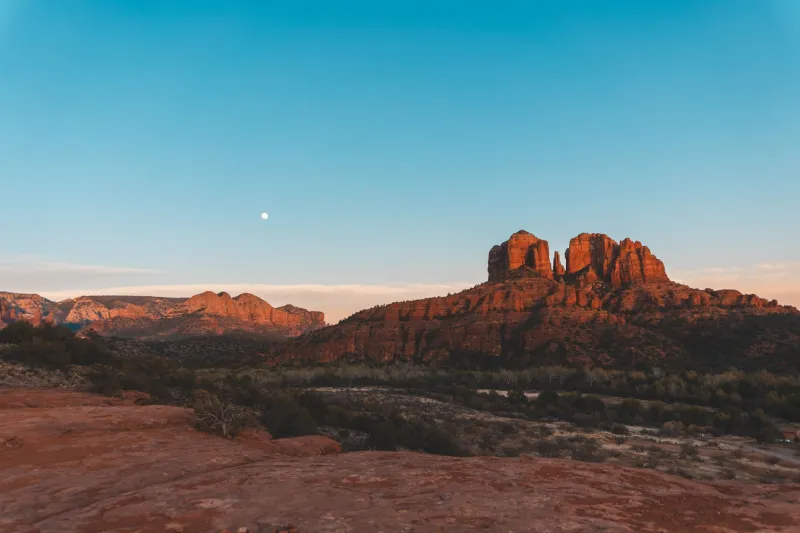
Arizona's commercial market—anchored by Phoenix, Scottsdale, Tempe, and Tucson—has expanded rapidly over the past decade, attracting national and international developers who expect marketing materials that match the scale of their ambitions. Meeting that expectation has required a new generation of photographers equipped with specialized tools, technical training, and a deep understanding of how light, architecture, and landscape interact in the Sonoran Desert environment.
The Drone Advantage: Seeing Properties From a New Altitude
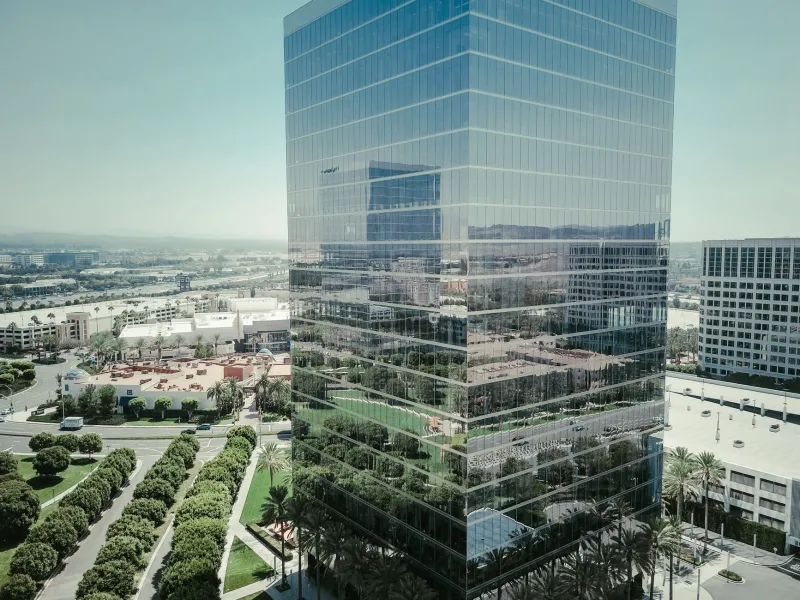
Perhaps no single technology has altered commercial real estate photography more profoundly than unmanned aerial systems—commonly known as drones. In a state where site context matters enormously, the ability to capture a property's relationship to its surroundings has become a critical marketing asset.
Consider a mixed-use development along the Loop 101 corridor in Scottsdale. Ground-level photography, no matter how expertly executed, cannot communicate the project's proximity to major transportation infrastructure, adjacent retail anchors, or the sweeping desert backdrop that makes Arizona properties distinctive. A drone-captured image at 200 feet elevation conveys all of this within a single frame.
FAA Part 107 certification is now a baseline requirement for any photographer working commercially with drones in Arizona. Beyond certification, however, the technical demands are considerable. Operators must account for Arizona's intense thermal activity, which peaks during summer afternoons and can destabilize smaller aircraft. Experienced aerial photographers in this market typically schedule flights during early morning hours or within the final hour before sunset, when thermal turbulence subsides and the desert light transitions into warmer, more architecturally flattering tones.
Several Arizona commercial developers have reported that drone photography directly accelerated their leasing timelines. A Tempe-based office park developer noted that aerial imagery incorporated into a broker presentation generated measurably stronger interest from national tenants who could immediately grasp the site's strategic advantages—something no floor plan or ground-level photograph could communicate as efficiently.
Architectural Imaging: The Discipline of Interior Light
While drones command attention for their dramatic perspectives, the discipline of architectural interior photography remains one of the most technically demanding specializations in the commercial real estate space. Arizona's climate creates a paradox for interior photographers: the state's abundant natural light is both an asset and a challenge.
The harsh midday sun characteristic of Phoenix and the surrounding metro area produces extreme contrast when it enters a commercial building's interior. Windows become blown-out white rectangles while surrounding walls fall into shadow—a result that communicates neither the quality of the space nor the architect's intent. Correcting this requires a layered approach.
Professional architectural photographers serving Arizona's commercial market routinely employ High Dynamic Range (HDR) bracketing, flash blending techniques, and in some cases, dedicated strobe lighting systems to balance interior ambient light with window views. The goal is a final image that appears entirely natural while reflecting a level of luminous detail that no single exposure could capture.
For large commercial spaces—conference centers, atrium lobbies, industrial facilities—the investment in specialized lighting equipment is substantial. A professional-grade tilt-shift lens alone, essential for correcting the vertical distortion that makes walls appear to lean in standard architectural photographs, represents a significant capital expenditure. Add to that portable strobe systems, color-calibrated LED panels, and the post-processing software required to merge exposures seamlessly, and it becomes clear why commercial architectural photography commands premium rates in Arizona's competitive market.
Case Studies: When Investment Translates to Results
The return on investment for specialized commercial photography is not theoretical. Across Arizona, specific examples illustrate how professional imaging has influenced real-world outcomes.
A Chandler industrial developer marketing a newly completed logistics facility engaged a specialized photographer to produce a full suite of aerial, exterior, and interior images. The resulting materials were incorporated into a CoStar listing and a targeted digital marketing campaign. Within six weeks, the facility attracted three qualified tenant inquiries—a pace the developer's broker described as notably faster than comparable properties marketed with conventional photography.
In downtown Tucson, a historic building undergoing adaptive reuse as creative office space presented a different challenge. The developer needed imagery that honored the structure's architectural heritage while communicating its modern functionality to prospective tenants from the technology sector. A photographer specializing in architectural work used a combination of natural light management and carefully placed supplemental lighting to produce images that appeared both timeless and contemporary. The building reached full occupancy ahead of projections.
These outcomes are not coincidental. Research consistently demonstrates that listings accompanied by professional-grade photography generate substantially higher engagement rates than those relying on amateur or smartphone-captured images—a finding that applies with equal force to commercial properties as it does to residential listings.
Staying Competitive: The Technical Investment Required
For photographers seeking to serve Arizona's commercial real estate industry, the barrier to entry has risen considerably. The market rewards those who combine technical mastery with business acumen, and remaining competitive requires ongoing investment in both equipment and education.
Beyond drones and tilt-shift lenses, professionals in this space are increasingly expected to deliver virtual tour content, video walkthroughs, and 3D spatial scans using platforms such as Matterport. Developers and brokers have come to regard these deliverables not as optional upgrades but as standard components of a complete marketing package.
Licensing and insurance considerations add further complexity. Commercial real estate photography in Arizona often involves work on active construction sites, which requires photographers to carry appropriate general liability coverage and, in some cases, to complete site-specific safety orientations.
For photographers willing to make these investments, however, the Arizona commercial real estate market represents a compelling professional opportunity. The state's continued population growth, its expanding logistics and technology sectors, and the sustained pace of commercial development across the Phoenix and Tucson metros ensure that demand for specialized property photography will remain strong for the foreseeable future.
The Visual Standard Has Changed
Arizona's commercial real estate industry has arrived at a moment where specialized photography is no longer a discretionary marketing expense—it is a competitive necessity. Developers who present properties through the lens of professional aerial, architectural, and interior imaging are not simply producing attractive materials. They are communicating competence, seriousness, and an understanding that first impressions, in a market crowded with options, are often decisive.
The photographers who serve this market carry a corresponding responsibility. Precision, technical fluency, and an ability to translate a property's genuine character into compelling visual content are the qualities that distinguish specialists from generalists—and in Arizona's booming commercial landscape, that distinction has never mattered more.