Selling Without Saying a Word: How Professional Product Photography Gives Arizona Businesses a National Edge
In a marketplace where a potential customer's attention lasts roughly three seconds, the photograph is the pitch. It is the handshake, the storefront window, and the salesperson all compressed into a single frame. Yet for many Arizona businesses — from Scottsdale boutiques and Tempe artisan makers to Phoenix-based manufacturers shipping goods across the country — the power of precision product photography remains largely untapped. Those who have discovered it, however, are competing at a level that once seemed reserved for brands with considerably larger budgets.
Professional product photography is not simply the act of placing an item on a surface and pressing a shutter. It is a discipline built on technical mastery, deliberate creative decision-making, and an intimate understanding of consumer psychology. When executed correctly, it transforms an ordinary object into something that communicates value, quality, and trust before a single word of copy is ever read.
The Arizona Marketplace and the Digital Shelf
Arizona's business landscape is remarkably diverse. The state is home to a thriving handcrafted goods community — jewelry makers working with turquoise and silver in Sedona, ceramic artists in Tucson, and leather craftspeople scattered across the high desert. It also supports a growing class of e-commerce retailers and small manufacturers who are shipping products to customers in New York, Chicago, and Los Angeles, competing directly with brands that have long-established digital presences.
For these businesses, the online product listing functions as the only point of contact between seller and buyer prior to purchase. Unlike a physical retail environment, where a customer can hold an item, examine its texture, and assess its weight, the digital shopping experience is mediated entirely through imagery. This places an enormous burden — and an equally significant opportunity — on the photographs themselves.
Studies consistently indicate that product image quality ranks among the top factors influencing purchase decisions in e-commerce. A blurred, poorly lit, or carelessly composed photograph does not merely fail to sell a product; it actively undermines consumer confidence in the brand behind it. Conversely, a well-crafted image communicates professionalism and attention to detail that extends, in the customer's mind, to the product itself.
Light as a Technical Language
Among the many variables that define professional product photography, lighting stands as perhaps the most consequential. The way light interacts with a subject determines how texture reads, how color renders, and how three-dimensional form is conveyed on a two-dimensional screen.
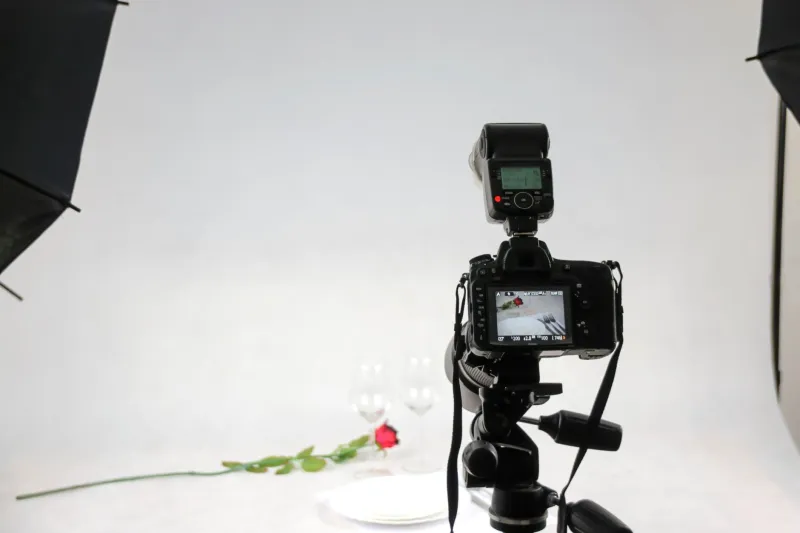
Arizona's abundant natural light is a resource that skilled photographers understand how to harness and control. However, professional product work rarely relies on ambient sunlight alone. A controlled studio environment — where the direction, intensity, diffusion, and color temperature of every light source can be precisely managed — is essential for achieving consistency across an entire product line. A jewelry collection, for instance, requires lighting that reveals the facets of gemstones without creating harsh reflections. A line of ceramic dishware demands soft, even illumination that communicates the subtlety of a glaze without flattening the form beneath it.
This level of technical precision does not happen by accident. It is the product of experience, specialized equipment, and a thorough understanding of how different materials respond to different lighting setups. Metals, fabrics, glass, matte surfaces, and translucent materials each present unique challenges that require distinct solutions.
Beyond the White Background: Contextual and Lifestyle Imagery
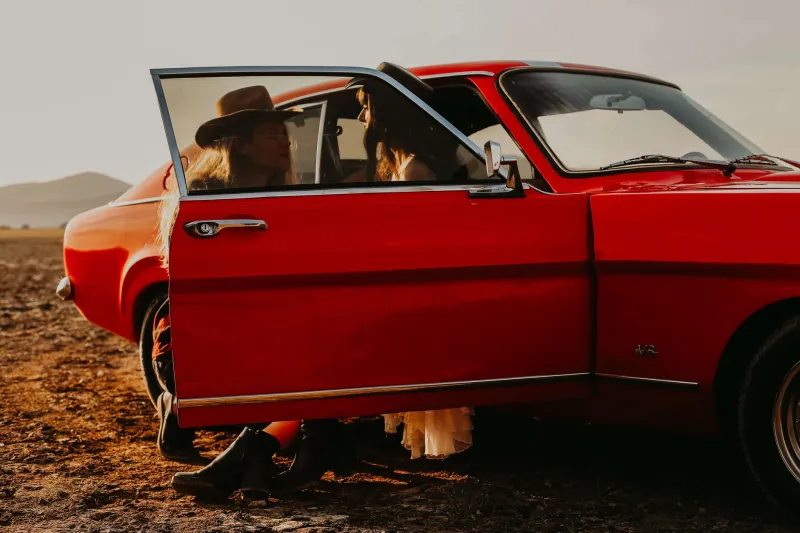
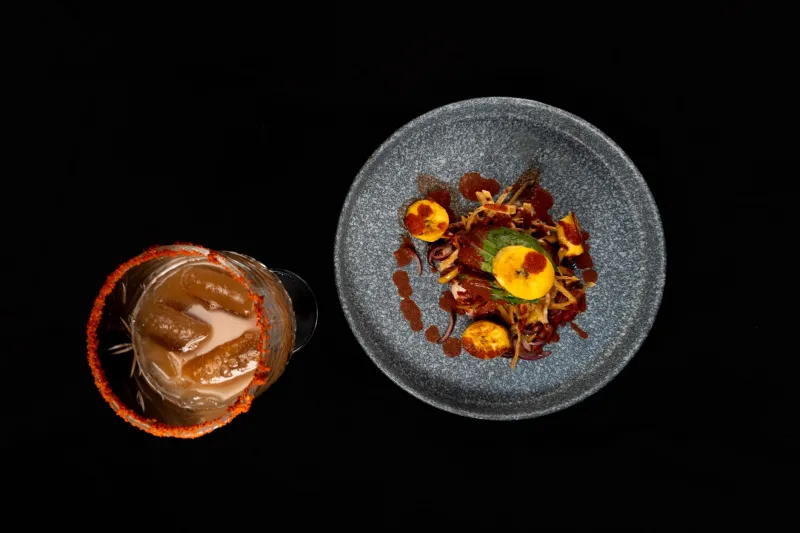
While clean, white-background product photography remains the standard for marketplace listings on platforms such as Amazon and major retail websites, the most effective product photography strategies extend well beyond this format. Contextual and lifestyle imagery — photographs that place a product within a believable, aspirational environment — play a critical role in brand storytelling and social media marketing.
For an Arizona outdoor goods retailer, this might mean photographing a hydration pack against the red rock formations of the Superstition Wilderness. For a Scottsdale skincare brand, it could involve creating a minimalist spa-inspired tableau that communicates the brand's ethos of luxury and self-care. These images do not simply document a product; they articulate a world in which the product belongs, and they invite the consumer to imagine themselves within that world.
The creative problem-solving required to construct these environments — sourcing props, selecting backdrops, directing talent, and composing a scene that feels authentic rather than staged — is a craft in its own right. It demands both a visual sensibility and a strategic understanding of the target audience the brand is attempting to reach.
The Technical Precision Behind the Frame
Beyond lighting and composition, professional product photography involves a layer of technical rigor that is rarely visible in the final image but is always present in its quality. Lens selection, depth of field, focus stacking for macro work, and color calibration are all variables that a skilled photographer manages with deliberate intention.
Post-production work is equally important. Color correction ensures that a product's hue renders accurately across different screens and devices — a consideration that is particularly critical for apparel, cosmetics, and home goods, where color accuracy directly affects return rates. Retouching removes dust, fingerprints, and manufacturing imperfections that are invisible to the naked eye but register immediately on a high-resolution sensor. Background removal and compositing allow images to be adapted for different platforms and marketing materials without requiring additional shooting sessions.
For Arizona businesses producing large product catalogs, this kind of systematic, technically consistent workflow is not a luxury — it is a competitive necessity.
Investing in Imagery as a Business Strategy
One of the most persistent misconceptions among small and mid-sized businesses is that professional photography represents a cost rather than an investment. The distinction matters. A cost is an expenditure that produces no measurable return. An investment generates value over time, and high-quality product photography does exactly that.
A single set of professionally produced images can serve a business across its website, its e-commerce listings, its social media channels, its email marketing campaigns, and its print collateral. The per-use cost of that initial investment diminishes with every application. More importantly, the lift in conversion rates, average order value, and brand perception that strong imagery produces compounds over time.
Arizona businesses that have made this shift — that have moved from smartphone snapshots to intentional, professionally produced product imagery — consistently report that the change in how their brand is perceived, both by new customers and by retail buyers and wholesale partners, is significant and immediate.
The Competitive Reality
The national and international e-commerce marketplace is not becoming less crowded. If anything, the proliferation of online selling platforms has made the visual environment more competitive, not less. In this context, the quality of a product photograph is one of the few differentiators entirely within a business's control.
For Arizona's artisans, retailers, and manufacturers, professional product photography is not the best-kept secret it once was — but it remains underutilized enough that those who invest in it gain a meaningful advantage over those who have not yet recognized its importance. The businesses that understand this are not simply taking better pictures. They are making a deliberate strategic choice to present their work, their products, and their brand at the highest possible level — and in a marketplace that judges instantly and without mercy, that choice makes all the difference.