Photographs That Move People: How Specialized Documentary Photography Amplifies Arizona's Nonprofit Missions
For Arizona's nonprofit organizations and community-focused charities, photography is far more than a communications tool — it is the most direct pathway to donor empathy, public awareness, and lasting institutional credibility. Capturing these human stories, however, demands a level of ethical care, technical specialization, and emotional intelligence that distinguishes genuine documentary photography from simple record-keeping.
Why Authentic Visual Storytelling Matters for Mission-Driven Work
Arizona is home to hundreds of nonprofit organizations addressing some of the region's most pressing social and environmental challenges: food insecurity in Maricopa County, access to healthcare in rural communities across the Navajo Nation, youth mentorship programs in South Phoenix, environmental conservation along the San Pedro River corridor, and refugee resettlement services in the greater Tucson area, among many others.
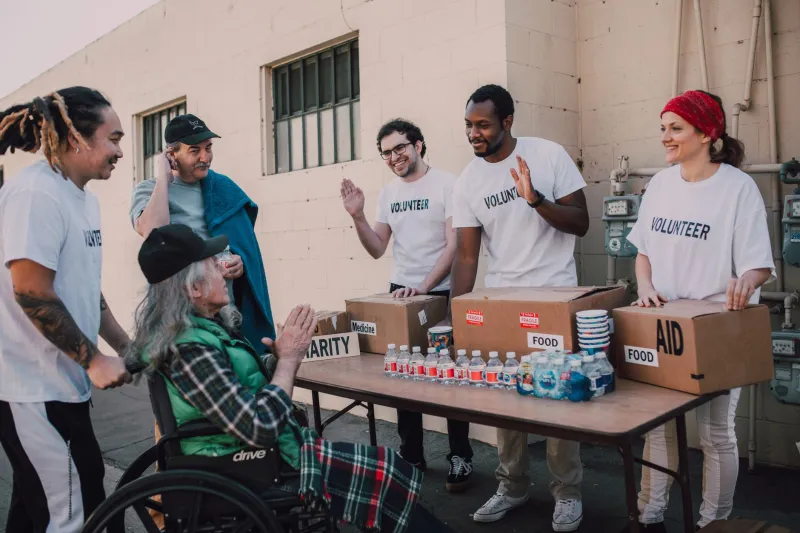
Each of these organizations operates with a dual imperative: to deliver meaningful services to the communities they serve, and to communicate the value of that work to donors, grant-making institutions, and the broader public. Photography sits at the intersection of both responsibilities. A well-composed, ethically produced photograph of a volunteer distributing meals at a Phoenix food bank communicates in seconds what pages of narrative text may struggle to convey — the scale of the need, the humanity of the response, and the dignity of those involved.
Yet the distinction between photography that genuinely serves a mission and photography that merely documents activity is significant. The former requires intention. The latter requires only a camera.
The Unique Technical Demands of Nonprofit Documentary Photography
Unlike commercial photography, where the environment can be controlled, lighting can be set in advance, and subjects can be directed, documentary photography for nonprofit organizations typically unfolds in unpredictable, often challenging conditions. A photographer documenting a community health fair in a parking lot in Glendale must contend with harsh midday Arizona sun, crowds of people in motion, and the need to capture genuine moments rather than staged ones — all while remaining unobtrusive enough not to disrupt the very activities being documented.
This demands a specific technical skill set. Photographers working in these environments rely heavily on fast prime lenses that perform well in low light, allowing them to work in community centers, shelters, and indoor gathering spaces without introducing disruptive flash equipment. High dynamic range shooting techniques help manage the extreme contrast between Arizona's bright outdoor environments and shaded interior spaces — a challenge that is particularly acute when photographing outdoor outreach programs or agricultural assistance initiatives in the state's rural communities.
Beyond technical competency, effective nonprofit documentary photography requires a photographer who can move quietly through a space, build trust with subjects quickly, and recognize the decisive moments that carry emotional weight without manufacturing them. This is a discipline closer in sensibility to photojournalism than to commercial portraiture, and it demands a corresponding level of experience and restraint.
Navigating Consent, Permission, and the Ethics of Sensitive Subjects
Perhaps no aspect of nonprofit photography is more consequential — or more frequently mishandled — than the matter of consent. Organizations working with vulnerable populations, including children, individuals experiencing homelessness, survivors of domestic violence, or community members in crisis, carry a profound ethical responsibility to ensure that the people they photograph are not further exposed to harm or indignity through the use of their images.
Best practices in this domain begin long before a camera is raised. Photographers working with Arizona nonprofits should collaborate closely with program staff to develop clear, accessible consent processes that respect the autonomy and privacy of participants. Written release forms are standard, but they must be genuinely understood by the individuals signing them — particularly in communities where English may not be a primary language. Arizona's significant Spanish-speaking population, as well as communities where Indigenous languages are spoken, requires organizations to invest in translated materials and, where appropriate, interpreter support during the consent process.
Beyond formal documentation, ethical nonprofit photography demands an ongoing, relational approach to consent. A subject who agrees to be photographed at the beginning of a program day retains the right to withdraw that agreement at any point. Photographers must remain attentive to non-verbal cues of discomfort and respond accordingly, prioritizing the wellbeing of individuals over the production of any particular image.
This approach does not diminish the power or authenticity of the resulting photographs. On the contrary, images produced within a framework of genuine respect tend to carry a different quality — a sense of trust between subject and photographer that is perceptible to viewers, even if they cannot articulate precisely why.
Composition and Narrative Strategy in Community Impact Photography
The most effective nonprofit photography tells a story with a beginning, a middle, and an implication of continuation. A single image rarely accomplishes this alone. Professional documentary photographers working with Arizona nonprofits typically approach an assignment by developing a visual narrative arc — identifying the key characters, the central action, and the environmental context that together communicate an organization's mission in human terms.
This might mean photographing a Habitat for Humanity build site in Mesa across an entire day, capturing the early morning arrival of volunteers, the physical labor of construction, the moment a family sees their future home taking shape, and the quiet satisfaction of a completed wall frame at dusk. Each image contributes to a visual essay that is far more compelling than any individual photograph in isolation.
Environmental portraiture — placing subjects within the context of their work or their community — is particularly powerful in nonprofit storytelling. A youth program coordinator photographed in the community garden she helped establish in a Tucson neighborhood communicates her role and her impact far more vividly than a headshot against a neutral background. These contextual choices reflect a deep understanding of how visual information is processed by donors and stakeholders who are evaluating whether to invest their resources and trust in an organization.
Building Long-Term Visual Assets That Serve Organizational Goals
Nonprofits that treat photography as a one-time communications need, rather than an ongoing strategic investment, consistently underutilize one of their most powerful advocacy tools. Organizations that work with a professional photographer on a sustained basis — documenting programs across seasons, capturing the arc of individual participants' journeys, and building a coherent visual library over time — develop a narrative depth that is simply not achievable through periodic, ad hoc documentation.
For Arizona nonprofits preparing grant applications to major foundations, annual reports for major donors, or public awareness campaigns through regional media, a well-curated archive of professional photography represents a tangible asset with measurable value. Grant reviewers, in particular, respond to organizations that can visually demonstrate program quality and community relationships — not merely describe them.
The investment required to build this kind of visual archive is modest relative to its strategic return. A nonprofit that commits to two or three focused photography sessions per year, coordinated with its major program milestones and donor communications calendar, will accumulate a body of imagery that serves its mission for years beyond the original shoots.
Photography as an Act of Witness
At its most fundamental level, documentary photography for nonprofit organizations is an act of witness — a commitment to seeing clearly, representing honestly, and preserving with care the human experiences that define a community's challenges and its capacity for response. In Arizona, where the contrasts between prosperity and hardship, between natural beauty and social need, are particularly vivid, this kind of photography carries genuine weight.
Organizations that approach it with the seriousness it deserves — investing in skilled professionals, honoring the dignity of their subjects, and developing coherent visual narratives over time — will find that their photographs do not merely illustrate their work. They extend it.